Understanding Photosynthesis: The Energy Journey for Autotrophs and Heterotrophs
Explore the fascinating process of photosynthesis, where autotrophs capture light energy to produce their own food via organic molecules. This biochemical pathway involves chloroplasts, which convert sunlight, water, and carbon dioxide into glucose and oxygen. The two main pathways of photosynthesis, light-dependent reactions and the Calvin cycle, illustrate the intricate energy capture and transformation. Additionally, understand the interconnected cycle of photosynthesis and cellular respiration, highlighting the roles of heterotrophs and autotrophs in sustaining life on Earth.

Understanding Photosynthesis: The Energy Journey for Autotrophs and Heterotrophs
E N D
Presentation Transcript
Getting energy to live Baby heterotroph! • Heterotrophs must consume organic molecules for energy. • Cellular respiration. • Autotrophs produce their own food molecules • Photosynthesis • Cellular respiration Autotroph
Capturing the Energy in Light • Photosynthesis is an example of a biochemical pathway. • Captures light energy. • Stores energy in form of chemical bonds. • Chemical bonds are in organic compounds.
Light Absorption in Chloroplasts • Chloroplasts are the structures that capture light. • Photosynthesis Reactions takes place in the chloroplasts. • Chloroplasts were once free living. (Pair share: just like…) Structure of a Chloroplast
Chloroplast structure • Chloroplasts are composed of: • Double membrane. • Thylakoids. • Grana • Stroma Structure of a Chloroplast
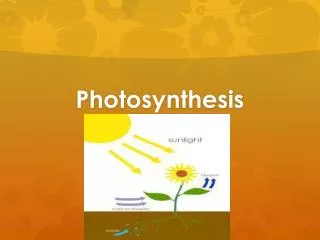
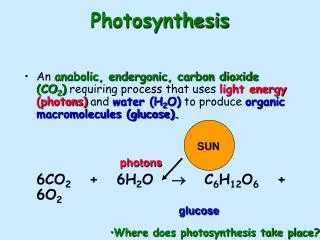
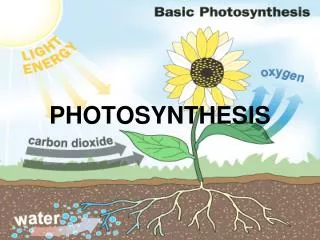
Energy For Life Processes • Photosynthesis • Raw materials are water and carbon dioxide. • Products are glucose and oxygen. • Energy source is sunlight.
A series of biochemical pathways • There are 2 main biochemical pathways • light dependent • Uses electrons “excited” by sunlight for energy • has 2 phases: photosystems 1 & 2 • Takes place in thylakoid • light independent (Calvin cycle). • Uses ATP & NADPH for energy to make glucose • Takes place in the stroma Diagram of the phases of photosynthesis
Cyclical processes • Photosynthesis and cellular respiration form a cycle. • Carbon dioxide & water • Oxygen & glucose • Heterotrophs • Autotrophs Photosynthesis - respiration cycle