Download
1 / 11
110 likes | 237 Vues
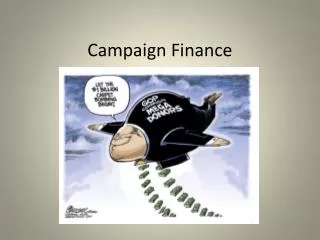
In the 2008 elections, Barack Obama raised $745 million, spending $730 million, while John McCain raised $333 million and struggled with funding, having to cut advertisements in key states like Michigan. With a spending ratio of nearly 3:1 on TV ads, Obama's financial advantage played a significant role in his victory. The McCain-Feingold Act of 2002 aimed to limit the influence of soft money in politics by banning certain issue ads before elections. However, this raised questions about free speech and the constitutionality of spending limits in campaign finance.

E N D
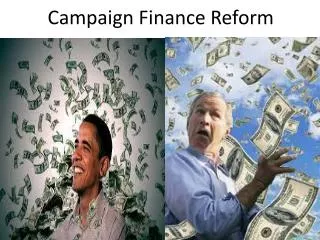
$745 Million In the campaigns for the 2008 elections Obama spent $730 million of the $745 million he raised compared to the $333 million McCain dished out. As we know, Obama won the election, just like 16 of the last 18 candidates with the larger budget have. $368 Million
Obama outspent McCain close to 3:1 on T.V. ads, and due to lack of funding McCain was even forced to remove his advertisements in Michigan. From September 30th to October 6th the President spent $20 million on T.V. time, while his opponent spent only $7.2 million.
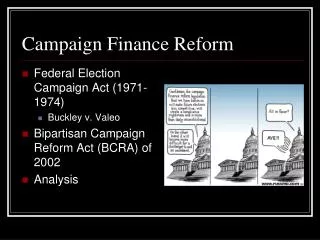
McCain-Feingold Act The McCain-Feingold Act of 2002 Is the closest to a campaign finance reform that has happened. The Act was based around taking away the influence of soft money (money raised by or donated to the party not the individual) and banning issue ads before elections. The issue based ads by third parties were banned 30 days before a primary and 60 days before a general election. Many groups fought these regulations, and the Supreme Court agreed that it was a violation to the freedom of speech.
Do you feel a ban on “issue advertisements” within certain time periods should be allowed?
Do you believe their should be a campaign finance reform, and if so what should be limited?