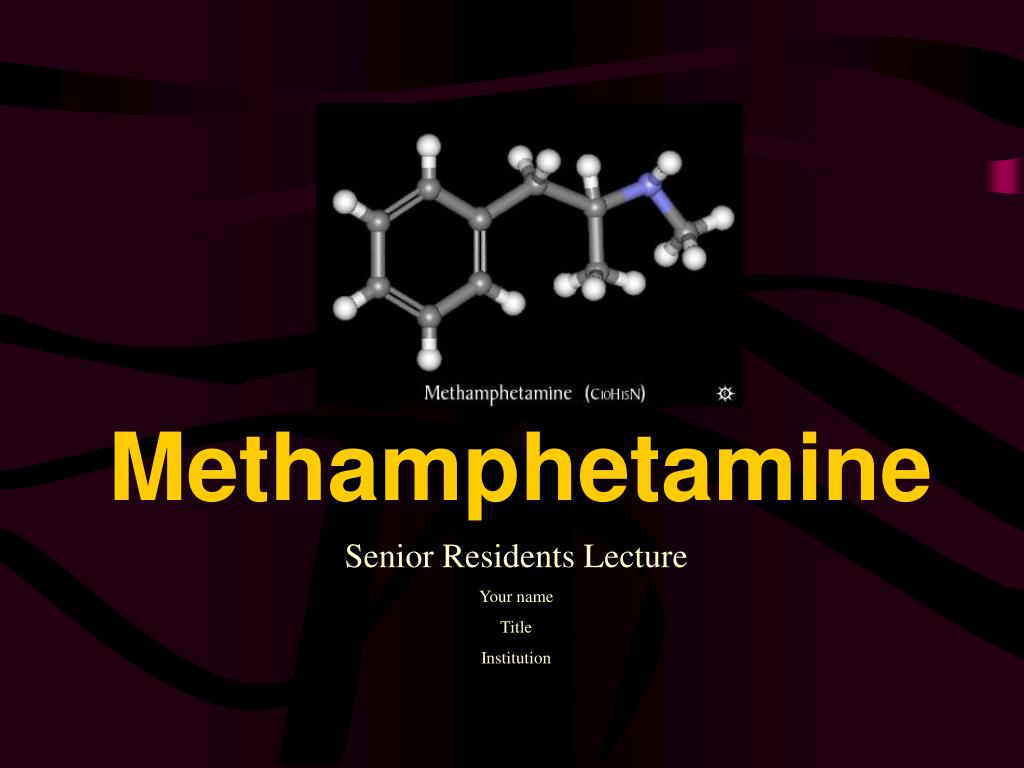
Methamphetamine. Senior Residents Lecture Your name Title Institution. Objective. Prevalence data Diagnostic criteria Review of methods of abuse Review of methods of action Review of effects of use Review of symptoms of intoxication Review of symptoms of withdrawal
Une image / un lien ci-dessous est fourni (tel quel) pour télécharger la présentation
Politique de téléchargement : le contenu du site vous est fourni TEL QUEL pour votre information et votre usage personnel ; il ne peut être vendu, concédé sous licence ni partagé sur d’autres sites sans l’accord de son auteur.Le contenu vous est fourni TEL QUEL, pour votre information et votre usage personnel uniquement.Téléchargez la présentation en cliquant sur ce lien.Lors du téléchargement, si vous ne parvenez pas à télécharger une présentation, l’éditeur a peut-être supprimé le fichier de son serveur.Pendant le téléchargement, si vous ne parvenez pas à obtenir une présentation, le fichier a peut-être été supprimé par l’éditeur.
F I N
Plus de contenu associé
Transcription de la présentation
Methamphetamine Senior Residents Lecture Your name Title Institution
Objective • Prevalence data • Diagnostic criteria • Review of methods of abuse • Review of methods of action • Review of effects of use • Review of symptoms of intoxication • Review of symptoms of withdrawal • Review of treatment principles • Review of pharmacological treatments • Review of non-pharmacological treatments • Practical pearls • Discussion of clinical vignettes • Treatment outcomes data • Co-morbidity NIDA COE for Physician Education
Prevalence • Lifetime prevalence of approximately 5.8% • 14 million Americans age >12 have used methamphetamine (http://www.drugabuse.gov/infofacts/methamphetamine.html) NIDA COE for Physician Education
Methamphetamine: Epidemiology Percentage of Individuals Reporting Methamphetamine Use by Age Group, 2006 Substance Abuse and Mental Health Services Administration survey data NIDA COE for Physician Education
Age in Years Past Year Methamphetamine Use among Persons Aged 12+, by Age: 2002-2006 Percent Using in Past Year Note: Estimates are based on new 2006 questions. 2002-2005 estimates are adjusted for comparability. NIDA COE for Physician Education + Difference between this estimate and the 2006 estimate is statistically significant at the .05 level.
Methamphetamine: Epidemiology High School Students Reporting Methamphetamine Use, 2006 National Institute on Drug Abuse and University of Michigan, Monitoring the Future Data from In-School Surveys of 8th-, 10th-, and 12th- Grade Students, 2007. NIDA COE for Physician Education
Past Year Methamphetamine Use among Persons Aged 12+, by Region: 2002 and 2006 Percent Using in Past Year Note: Estimates are based on new 2006 questions. 2002 estimates are adjusted for comparability. NIDA COE for Physician Education + Difference between this estimate and the 2006 estimate is statistically significant at the .05 level.
Diagnostic CriteriaMethamphetamine Abuse • A maladaptive pattern of substance use leading to clinically significant impairment or distress, as manifested by one (or more) of the following, occurring within a 12-month period: • recurrent substance use resulting in a failure to fulfill major role obligations at work, school, home (e.g., repeated absences or poor work performance related to substance use; substance-related absences, suspensions, or expulsions from school; neglect of children or household) • recurrent substance use in situations in which it is physically hazardous (e.g., driving an automobile or operating a machine when impaired by substance use) • recurrent substance-related legal problems (e.g., arrests for substance-related disorderly conduct) • continued substance use despite having persistent or recurrent social or interpersonal problems caused or exacerbated by the effects of the substance (e.g., arguments with spouse about consequences of intoxication, physical fights) • The symptoms have never met the criteria for Substance Dependence for this class of substances. [DSM-IV, Diagnostic and Statistical Manual of Mental Disorders, ed. 4. Washington DC: American Psychiatric Association (AMA). 1994.] NIDA COE for Physician Education
Diagnostic CriteriaMethamphetamine Dependence • A maladaptive pattern of substance use, leading to clinically significant impairment or distress, as manifested by three (or more) of the following, occurring at any time in the same 12-month period: • tolerance, as defined by either of the following: • a need for markedly increased amounts of the substance to achieve intoxication or desired effect • markedly diminished effect with continued use of the same amount of substance • withdrawal, as manifested by either of the following: • the characteristic withdrawal syndrome for the substance • the same (or a closely related) substance is taken to relieve or avoid withdrawal symptoms • the substance is often taken in larger amounts or over a longer period than was intended • there is a persistent desire or unsuccessful efforts to cut down or control substance use • a great deal of time is spent in activities to obtain the substance, use the substance, or recover from its effects • important social, occupational or recreational activities are given up or reduced because of substance use • the substance use is continued despite knowledge of having a persistent or recurrent physical or psychological problem that is likely to have been caused or exacerbated by the substance (e.g., continued drinking despite recognition that an ulcer was made worse by alcohol consumption) [DSM-IV, Diagnostic and Statistical Manual of Mental Disorders, ed. 4. Washington DC: American Psychiatric Association (AMA). 1994.] NIDA COE for Physician Education
Video clip • Diagnostic interview NIDA COE for Physician Education
Mechanism of Action • Increased release of Serotonin • Increased release of nor-epinephrine • Increased release of dopamine levels • (primary mechanism of feeling high) NIDA COE for Physician Education
Functionally… Dopamine D2 Receptors are Lower in Addiction Cocaine DA DA DA DA DA DA DA DA DA DA DA DA Meth Reward Circuits DA D2 Receptor Availability Non-Drug Abuser DA DA Alcohol DA DA DA DA Heroin Reward Circuits Drug Abuser Control Addicted
Effect of Methamphetamines Courtesy of Jane Koropsak, Brookhaven National Lab. NIDA COE for Physician Education
2.0 1.8 1.6 1.4 1.2 Dopamine Transporter Bmax/Kd Time Gait 1.0 7 8 9 10 11 12 13 (seconds) 2.0 1.8 1.6 1.4 1.2 Delayed Recall (words remembered) 1.0 16 14 12 10 8 6 4 Dopamine Transporters in Methamphetamine Abusers Motor Task Loss of dopamine transporters in the meth abusers may result in slowing of motor reactions. Normal Control Memory task Loss of dopamine transporters in the meth abusers may result in memory impairment. Source: Volkow et al., Am. J. Psychiatry, 2001. Methamphetamine Abuser
3 0 ml/gm Partial Recovery of Brain Dopamine Transporters in Methamphetamine (METH) Abuser After Protracted Abstinence METH Abuser (1 month abstinent) Normal Control METH Abuser (24 months abstinent) Source: Volkow, ND et al., Journal of Neuroscience, 2001.
Short-Term Effects • Increased attention and decreased fatigue • Increased activity and wakefulness • Decreased appetite • Euphoria and rush • Increased respiration • Rapid/irregular heartbeat • Hyperthermia • A distorted sense of well-being • Effects that can last 8 to 24 hours http://www.drugabuse.gov/ResearchReports/methamph/methamph3.html#short NIDA COE for Physician Education
Addiction Psychosis, including: Paranoia and delusions hallucinations repetitive motor activity Changes in brain structure and function Memory Loss Aggressive or violent behavior Anxiety and Mood disturbances Severe dental problems Weight loss Fatigue High blood pressure Tachycardia Tachypnea Myocardial infarctions Skin lesions Stroke Dehydration Weight loss Death Long Term effectsBehavior Changes Medical http://www.drugabuse.gov/ResearchReports/methamph/methamph3.html#short NIDA COE for Physician Education
Video clip • Effects of Methamphetamine use NIDA COE for Physician Education
Drug Use Has Played a Prominent Role in the HIV/AIDS Epidemic In Several Ways • Disease Transmission • IV Drug Use • Drug User Disinhibition Leading to • High Risk Sexual Behaviors • Progression of Disease
Fetal Effects of Methamphetamine Preliminary evidence suggests that prenatal methamphetamine exposure is associated with subtle physical and neurobehavioral effects including: • Lower arousal • Poorer self-regulation • Poorer quality of movement • Increased central nervous system stress • Small for gestational age • Long-term consequences??? NIDA COE for Physician Education
Clinical PresentationIntoxication • Rush (5-30 min) – • Adrenal gland release of epinephrine • Explosive release of dopamine • Intensely euphoric • Tacchycardia, BP spike, heart rhythm abnormalities NIDA COE for Physician Education
Clinical PresentationIntoxication • High (4-16 hrs) • Continuation of the physical and mental hyperactivity • Binge (3-15 days) • Continuation of the high • Larger doses required to achieve same intensity • Little or no rush or high felt • Physical and mental hyperactivity NIDA COE for Physician Education
Clinical PresentationWithdrawals • “Crash” • Follows a binge • Feelings of emptiness and dysphoria • Often repeat use of this drug or alcohol/other drugs used to self-medicate withdrawal symptoms NIDA COE for Physician Education
Clinical PresentationWithdrawals • “Crash” (1-3 days) • Tired, lifeless and sleepy • Withdrawal (30-90 days) • Slow progression to depression, lethargy, cravings, suicidal thoughts NIDA COE for Physician Education
Basic Principles of Treatment • No single treatment is appropriate for all individuals. • Treatment needs to be readily available. • Effective treatment attends to multiple needs of the individual, not just his or her drug use. • An individual's treatment and services plan must be assessed continually and modified as necessary to ensure that the plan meets the person's changing needs. • Remaining in treatment for an adequate period of time is critical for treatment effectiveness. • Counseling (individual and/or group) and other behavioral therapies are critical components of effective treatment for addiction. • Medications are an important element of treatment for many patients, especially when combined with counseling and other behavioral therapies. • Addicted or drug-abusing individuals with coexisting mental disorders should have both disorders treated in an integrated way. • Medical detoxification is only the first stage of addiction treatment and by itself does little to change long-term drug use. • Treatment does not need to be voluntary to be effective. • Possible drug use during treatment must be monitored continuously. • Treatment programs should provide assessment for HIV/AIDS, hepatitis B and C, tuberculosis and other infectious diseases, and counseling to help patients modify or change behaviors that place themselves or others at risk of infection. • Recovery from drug addiction can be a long-term process and frequently requires multiple episodes of treatment. (National Institute on Drug Abuse, Principles of Drug Addiction Treatment: A Research-Based Guide ) NIDA COE for Physician Education
Non-Addicted Brain Addicted Brain Control Control Drive GO Saliency NO GO Drive Saliency Memory Memory Why Can’t Addicts Just Quit? Because Addiction Changes Brain Circuits Source: Adapted from Volkow et al., Neuropharmacology, 2004.
Decrease the rewarding value of drugs Increase the rewarding value of non-drug reinforcers CONTROL CONTROL REWARD DRIVE REWARD DRIVE MEMORY MEMORY CONTROL CONTROL Weaken learned positive associations with drugs and drug cues Strengthen frontal control REWARD DRIVE REWARD DRIVE MEMORY MEMORY Treating the ADDICTED Brain
Pharmacological treatments • No approved medications • Off label use / treatment of co-morbid conditions • Antidepressants • Mood stabilizers • Antipsychotic medications • Supportive treatment (http://www.drugabuse.gov/about/Legislation/MethReport/Introduction.html) NIDA COE for Physician Education
Non-pharmacological Treatments • Motivation Enhancement Therapy • Cognitive Behavioral Therapy • Contingency Management • MATRIX Model • Family Education • Group therapy • Self-Help Groups (12 step program) http://www.drugabuse.gov/pdf/news/Meth1106.pdf NIDA COE for Physician Education
Video clip 3 & 4 • Traditional / Interventional model • Video Clip 3 NIDA COE for Physician Education
Video clip 3 & 4 • Motivational Enhancement Therapy (MET) • Video Clip 4 NIDA COE for Physician Education
Role of Spirituality Specific information on role of religion for methamphetamine limited Data on general drug use suggests principles of: • Honesty • Open mindedness • Willingness Spirituality: • promotes treatment adherence • promotes mental health • promotes decreased use http://www.drugabuse.gov/TXManuals/IDCA/IDCA3.html NIDA COE for Physician Education
Pearls • Methamphetamine users like stimulants and often abuse caffeine. • Methamphetamine users often get depressed and suicidal when coming off of methamphetamines • Methamphetamine may seek stimulants for ADHD. NIDA COE for Physician Education
Clinical Vignette # 1 A 22 year old white male is admitted to the ER with paranoia, olfactory, tactile, auditory and visual hallucinations, agitation and behavior disturbances. This is atypical behavior for him. Acute management should include: • Medical assessment, including CT of head, EEG • Urine Drug Screen • Pharmacotherapy with tranquilizers (Benzodiazepines and antipsychotics) , IV fluids and general supportive treatment NIDA COE for Physician Education
Connexion au compte
Connectez-vous pour publier votre contenu sur SlideServe.