Understanding Energy Roles and Flow in Ecosystems: Producers, Consumers, and Decomposers
110 likes | 231 Vues
In ecosystems, organisms play vital roles as producers, consumers, or decomposers. Producers, such as plants and algae, create their own food through photosynthesis, serving as the primary energy source. Consumers, which include herbivores, carnivores, omnivores, and scavengers, depend on producers for sustenance. Decomposers, like fungi and bacteria, recycle nutrients by breaking down waste and dead organisms. Energy flows through food chains and webs, with energy pyramids illustrating energy transfer efficiency among trophic levels, where only about 10% of energy moves to the next level.


Understanding Energy Roles and Flow in Ecosystems: Producers, Consumers, and Decomposers
E N D
Presentation Transcript
Energy Flow in Ecosystems Chapter 23-1
An organism’s energy role in an ecosystem may be that of a producer, consumer, or decomposer
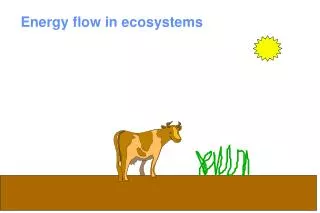
Producer • An organism that makes its own food through the process of photosynthesis • Includes plants, algae, and some microorganisms • The source of all food in an ecosystem
Consumer • Cannot make their own food, depend on producers for food • Classified by what they eat • Herbivores-plant eaters • Carnivores-meat eaters • Omnivores-eats plants and animals
Scavenger-a carnivore that feeds on the bodies of dead organisms • Decomposer • Organisms that break down waste and dead organisms • Return raw materials to the environment • ex. Fungi & bacteria
Food Chain • A series of events in which one organism eats another and obtains energy • First organism is always a producer • The second organism, called a first level consumer, eats the producer
The next consumer, called a second level consumer, eats the first level consumer • One possible path of energy through an ecosystem
Food Web • Consists of many overlapping food chains in an ecosystem
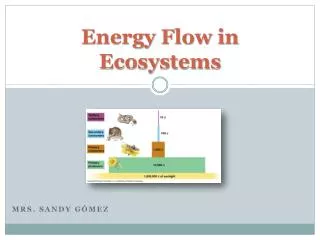
Energy Pyramid • Shows the amount of energy that moves from one feeding level to another in a food web • The most energy is available at the producer level • At each level, there is less available energy than at the level below • Only about 10% is transferred to the next higher level