Download

1 / 15
150 likes | 276 Vues
The concept of right-brained vs. left-brained thinking is often discussed in relation to how individuals process information. It is widely believed that left-brained individuals excel in logical reasoning and mathematics, while right-brained individuals are more adept at creativity and spatial awareness. However, this dichotomy simplifies the brain's complexity. Understanding the differences between brain hemispheres can help shed light on cognitive strengths and weaknesses. Additionally, specific mathematical concepts like circumcenter and incenter also illustrate various ways of analytical thinking.

E N D
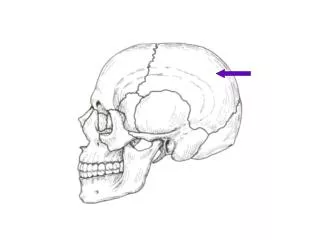
What is the “Right-Brained/left-brained” argument? 1/17/12 Warm-up
1/17/12Warm-up • There is not really an argument, but both sides of the brain process different information. Sometimes people say your are “one-brained dominant” because you tend to emulate the abilities of what that side of the brain controls. • For example, left-brained people are good at logic and calculation, while right-brained people are better at spatial understanding.
1/17/12Warm-up • What is the difference between the circumcenter and the incenter?
1/17/12Warm-up • What is the difference between the circumcenter and the incenter? • The circumcenter is the point of concurrency of the perpendicular bisectors and is equidistant from the vertices
1/17/12Warm-up • What is the difference between the circumcenter and the incenter? • The circumcenter is the point of concurrency of the perpendicular bisectors and is equidistant from the vertices • The incenter is the point of concurrency of the angle bisectors and is equidistant from the sides
1/17/12Warm-up • You drove to your cousin’s house, which is 460 miles away. After two hours, you had gone 100 miles. After 8 hours, you reached your destination. Write an equation that gives the number of miles you had driven, y, in terms of the number of hours you had driven, x.
1/17/12Warm-up • You drove to your cousin’s house, which is 460 miles away. After two hours, you had gone 100 miles. After 8 hours, you reached your destination. Write an equation that gives the number of miles you had driven, y, in terms of the number of hours you had driven, x. • What are the two points you have to work with? (time is on the x-axis)
1/17/12Warm-up • You drove to your cousin’s house, which is 460 miles away. After two hours, you had gone 100 miles. After 8 hours, you reached your destination. Write an equation that gives the number of miles you had driven, y, in terms of the number of hours you had driven, x. • What are the two points you have to work with? (time is on the x-axis) (2, 100) and (8, 460)
1/17/12Warm-up • You drove to your cousin’s house, which is 460 miles away. After two hours, you had gone 100 miles. After 8 hours, you reached your destination. Write an equation that gives the number of miles you had driven, y, in terms of the number of hours you had driven, x. • What are the two points you have to work with? (time is on the x-axis) (2, 100) and (8, 460) y = 60x – 20
1/17/12Warm-up • Complete the two-column proof J Given: JL NL K M L is the midpoint of KM L Prove: JKL NML Statements:Reasons: N 1. JL NL 1. 2. 2. Given 3. 3. Vertical Angles Thrm 4. KL ML 4. 5. JKL NML 5.
1/17/12Warm-up • Complete the two-column proof J Given: JL NL K M L is the midpoint of KM L Prove: JKL NML Statements:Reasons: N 1. JL NL 1. Given 2. 2. Given 3. 3. Vertical Angles Thrm 4. KL ML 4. 5. JKL NML 5.
1/17/12Warm-up • Complete the two-column proof J Given: JL NL K M L is the midpoint of KM L Prove: JKL NML Statements:Reasons: N 1. JL NL 1. Given 2. L is the midpoint 2. Given 3. 3. Vertical Angles Thrm 4. KL ML 4. 5. JKL NML 5.
1/17/12Warm-up • Complete the two-column proof J Given: JL NL K M L is the midpoint of KM L Prove: JKL NML Statements:Reasons: N 1. JL NL 1. Given 2. L is the midpoint 2. Given 3. LJLK LJLN 3. Vertical Angles Thrm 4. KL ML 4. 5. JKL NML 5.
1/17/12Warm-up • Complete the two-column proof J Given: JL NL K M L is the midpoint of KM L Prove: JKL NML Statements:Reasons: N 1. JL NL 1. Given 2. L is the midpoint 2. Given 3. LJLK LJLN 3. Vertical Angles Thrm 4. KL ML 4. Definition of midpoint 5. JKL NML 5.
1/17/12Warm-up • Complete the two-column proof J Given: JL NL K M L is the midpoint of KM L Prove: JKL NML Statements:Reasons: N 1. JL NL 1. Given 2. L is the midpoint 2. Given 3. LJLK LJLN 3. Vertical Angles Thrm 4. KL ML 4. Definition of midpoint 5. JKL NML 5. SAS