Download

1 / 7
70 likes | 202 Vues
The female reproductive system is designed to facilitate fertilization and protect internal organs. Its external structures serve two primary functions: allowing sperm entry and safeguarding the internal genitalia against infections. Key components include the ovaries, cervix, and fallopian tubes. Women are born with approximately 2 million ova, but by puberty, only around 400,000 remain. Throughout her reproductive years, a woman typically releases about 400 eggs. Awareness of conditions like Pelvic Inflammatory Disease (PID) and endometriosis is crucial for reproductive health.

E N D
Female Reproductive Abner Diaz and Ivan Gutierrez
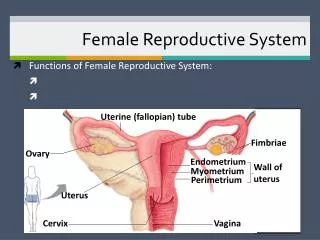
Functions of the Organs • The function of the external female reproductive structures (the genital) is twofold: To enable sperm to enter the body and to protect the internal genital organs from infectious organisms.
Vocabulary • Anatomy • Bartholdi's glands • Birth control • Cervix • Fallopian tube
Diseases of the System • Pelvic inflammatory disease (PID) • Endometriosis
Facts • Men and women are each born with two gonads (two internal sex organs)—the testes (plural) in men, and the ovaries in women. • The human female is born with all the ova (eggs) she will ever have—about 2 million. These are immature. By puberty, she will have only about 400,000 ova, the rest having dwindled away. During her reproductive life, a woman will only ovulate (release from the ovary) about 400 eggs. Which eggs are selected to mature or ripen to ovulation is still a biological mystery.
References • Google • Yahoo