Download
1 / 29
290 likes | 400 Vues
This lecture by Dr. Eric Simms explores the critical aspects of surgical infections, from historical foundations to modern practices. It covers the significance of handwashing practices by Ignaz Semmelweis and Joseph Lister's antiseptic methods. Topics include recognizing soft tissue and post-operative infections, understanding the inflammatory response, and defining sepsis and septic shock. The presentation emphasizes antibiotic prophylaxis, risk factors for infections, and outlines essential treatment protocols for various types of surgical and hospital-acquired infections to improve patient outcomes.

E N D
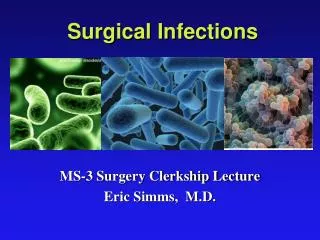
Surgical Infections MS-3 Surgery Clerkship Lecture Eric Simms, M.D.
Ignaz Semmelweis 1847 Realized that washing hand with a chlorinated lime solution decreased incidence of newborn death from “puerperal fever’.
Joseph Lister • 1883-1897 • British surgeon • Used Carbolic Acid (Phenol) to clean hands, instruments and wipe on surgical wounds drastically decreased infections.
Overview • Recognizing Infection • Soft Tissue Infections • Post-operative Infections • Surgical Site Infection • Hospital Acquired Infections • Antibiotic Prophylaxis • Blood Born Pathogens
Infection Infection is defined by: • Microorganisms in host tissue or the bloodstream • Inflammatory response to their presence.
Inflammatory Response Localized: • Rubor, Calor, Dolor, Tumor, and functio laesa (loss of function) Systemic: • Systemic Inflammatory Response Syndrome (SIRS)
S.I.R.S. Any Two of the Following Criteria • Temperature: < 36.0, >38.0 • Heart Rate : >90 • Respiratory Rate: >20 • WBC: <4,000, >12,000
Sepsis Definition: SIRS plus evidence of local or systemic infection. Septic Shock Definition: Sepsis plus end organ hypoprofusion. Mortality of up to 40%
Soft Tissue Infections: • Cellulitis • Abscess • Necrotizing Infections
Cellulitis Definition: Diffuse infection with severe inflammation of dermal and subcutaneous layers of the skin Diagnosis: Pain, Warmth, Hyperesthesia Treatment: Antibiotics. Common Pathogens: Skin Flora (Streptococcus/Staphylococcus)
Abscess Definition: Infectious accumulation of purulent material (Neutrophils) in a closed cavity Diagnosis: Fluctuant: Moveable and compressible Treatment: Drainage
Necrotizing Soft Tissue Infection Definition: Deep infection of skin and soft tissue that may spread rapidly along facial planes. Diagnosis: Purely Clinical, dishwater discharge, gray tissue, pain out of proportion to examination, bulla, and dark, golden discoloration. Treatment: True Surgical Emergency, Antibiotics
Necrotizing Soft Tissue Infection • Common Pathogens • Clostridium • Group A streptococcus • Polymicrobial • Toxic Shock Syndrome • Streptococcus • Staphylococcus
Post-Operative Infections • Fever After Surgery • The “Five W’s” • Wind: Atelectisis • Water: UTI • Walking: DVT • Wonder Drug: Medication Induced • Wound: Surgical Site Infection
Surgical Site Infections • 3rd most common hospital infection • Incisional • Superficial • Deep • Organ Space • Generalized (peritonitis) • Abscess
Host Risk Factors • Diabetes mellitus • Hypoxemia • Hypothermia • Leukopenia • Nicotine (tobacco smoking) • Immunosuppression • Malnutrition • Poor skin hygiene
Perioperative Risk Factors • Operative site shaving • Breaks in operative sterile technique • Improper antimicrobial prophylaxis • Prolonged hypotension • Contaminated operating room • Poor wound care postoperatively • Hyperglycemia • Wound closure technique
Treatment • Incisional: open surgical wound, antibiotics for cellulitis or sepsis • Deep/Organ space: Source control, antibiotics for sepsis
Operative Antibiotic Prophylaxis • Decreases bacterial counts at surgical site • Given within 30 minutes prior to starting surgery • Vancomycin 1-2 hours prior to surgery • Redose for longer surgery • Do not continue beyond 24 hours
Other Hospital Acquired Infections • Urinary Tract Infection • Indwelling Catheter Infection • Pneumonia
Use/Choice of Antibiotics • Use only when indicated • Start with broad spectrum antibiotics designed to cover likely pathogens • Take cultures when possible • Deescalate spectrum once pathogen is know • Have a plan for duration