Understanding Soil Profiles: The Importance of Soil Horizons and Classification
This comprehensive guide explores the significance of soil profiles and the various horizons within them, specifically focusing on the O, A, E, B, C, and R layers. It highlights the diagnostic properties of soils, the methodologies for soil classification, and the impact of pedogenic controls such as climate and biota on soil formation. Additionally, the text delves into essential soil orders, including Mollisols and Alfisols, and discusses the role of organic materials and chelators in enhancing soil properties and water absorption. Understanding these concepts is crucial for sustainable land management.

Understanding Soil Profiles: The Importance of Soil Horizons and Classification
E N D
Presentation Transcript
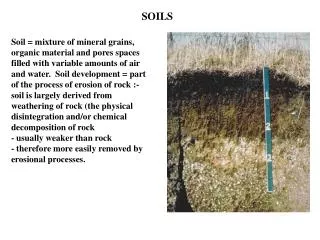
E R
Organics: • Chelators • Increases water absorption • Releases high amounts of CO2
Diagnostic properties (B horizon) • Texture • Structure • Color
Diagnostic properties (B horizon) • Texture • Structure • Color
I. Soil ProfileII. Soil Classification A. Method: non genetic
I. Soil ProfileII. Soil Classification A. Method: non genetic B. Orders: 12 total
Entisols Inceptisols Mollisols Spodosols Alfisols Ultisols Oxisols Aridisols Vertisols Histosols Andesols Gelisols Soil Orders
Soils III. Pedogenic Controls and RegimesA. Factors of Soil Formation (Jenny, 1951)
Soils III. Pedogenic Controls and RegimesA. Factors of Soil Formation 1.Climate
Soils III. Pedogenic Controls and RegimesA. Factors of Soil Formation 1.Climate 2. Biota
Soils III. Pedogenic Controls and RegimesA. Factors of Soil Formation 1.Climate 2. Biota 3. Parent material