NOAA Tropical Cyclone Research Activities
50 likes | 255 Vues
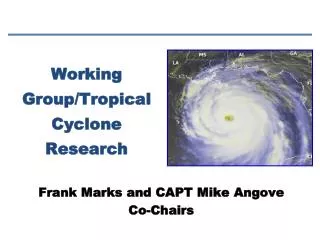
NOAA Tropical Cyclone Research Activities. Robert Rogers, NOAA/AOML HRD Working Group for Tropical Cyclone Research. Unified NOAA approach to guide and accelerate improvements in forecasts, with emphasis on rapid intensity change, and reduction in uncertainty.


NOAA Tropical Cyclone Research Activities
E N D
Presentation Transcript
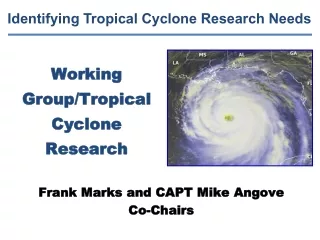
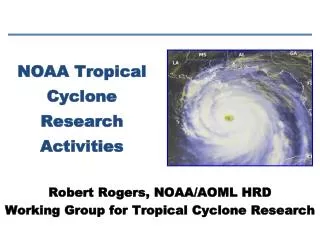
NOAA Tropical Cyclone Research Activities Robert Rogers, NOAA/AOML HRD Working Group for Tropical Cyclone Research
Unified NOAA approach to guide and accelerate improvements in forecasts, with emphasis on rapid intensity change, and reduction in uncertainty. • Improve forecasts and increase confidence to enhance mitigation and preparedness decisions. • Responds to input from stakeholders, NSB, OFCM, and HIRWG reports. • Embraces strong collaboration with non-NOAA partners with objective to transition research into operations.
NOAA HFIP Metrics for Success • Metric #1: Reduce track error by 50% at all lead times (100 nm to 50 nm at 48 h) • Metric #2: Reduce intensity error by 50% at all lead times (14 kt to 7 kt at 48 h) • Metric #3: Increase Probability of Detection and reduce False Alarm Ratio of rapid intensification (> 30 kt/24 h) events • Metric #4: Extend the lead time to 7 days.
NOAA Detailed Research Activity Combined Man-Years vs. Detailed Research AOC, AOML, NESDIS, UAS, ESRL, JHT EMC, AOML, ESRL, JHT, NESDIS AOML, NESDIS Intensity / Structure Track Genesis QPF Surge Model Development Observations [Seasonal]
Intensity Change Stat Aids Genesis QPF Track Fcst Storm Surge Observations Size/Structure SST Gradients Model Res vs Ensembles Fcst Efficiency Wind Analysis Radar/Sat. Data Seasonal Progs Combined Man-Years Mapped to NHC / CPHC Priorities