Understanding Product Liability: Defects, Design Issues, and Warning Responsibilities
Product liability under strict liability examines whether a product was made with defects. The general defect theory suggests that accidents typically arise from such defects, with plaintiffs needing to exclude other causes. This liability extends to design negligence, requiring a balance between risks and utility, including monetary costs and safety trade-offs. Additionally, warnings play a crucial role in informing consumers about potential dangers. Effective warnings should clearly convey risks, methods to mitigate exposure, and assess the reasonableness of these warnings based on foreseeability and common sense.


Understanding Product Liability: Defects, Design Issues, and Warning Responsibilities
E N D
Presentation Transcript
Manufacturing (Strict Liability) Was it made with a defect? Product must be substantially unaltered. Ø modifications Ø damages Ø wear & tear The General Defect Theory states that… Ø Accidents of this type do not occur without a defect Ø The Plaintiff sufficiently eliminated other proximate causes Design (Negligence) Was it made with a defective design? RISKS vs. UTILITY Ø Monetary costs for a new design Ø Lost utility (positives of old design) Ø Trade off safety costs (negatives about new design)
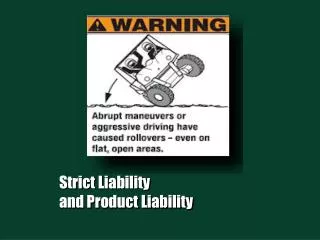
Warnings (Negligence) Does it warn us like it should? • Functions of Warnings • 1. Informationalthe product is dangerous • 2. Warningthere are ways to limit the risk • 3. Judging reasonableness • o Is the risk known? • o Is the harm foreseeable? • o Reasonableness: is it just plain silly to warn about? • Exceptions – obvious danger