Understanding World War II: The Impact of Rationing and Occupation (1939-1945)
This comprehensive overview of World War II (1939-1945) explores the conflict between the Axis Powers—Germany, Italy, Japan, and the Allies, including Britain, France, the U.S., and the Soviet Union. The narrative highlights the harsh realities of life during wartime, including food and clothing rationing that began in 1940, the occupation of various countries, and the devastating effects of air raids and bombings. The book illustrates how civilians adapted through gardening and community efforts, emphasizing resilience in challenging times.


Understanding World War II: The Impact of Rationing and Occupation (1939-1945)
E N D
Presentation Transcript
WORLD WAR 2 1939-1945 By Susie Henchion & Sadhbh Dowling
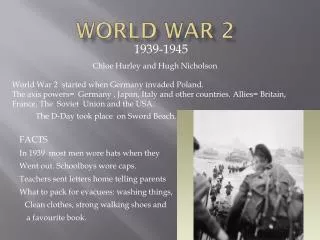
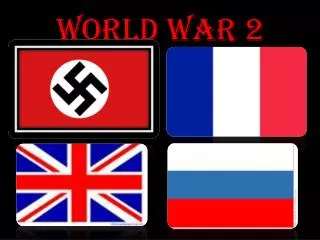
The World at War World War 2 was fought between two groups of countries. On one side were the Axis Powers, including Germany, Italy and Japan. On the other side were the Allies. They included Britain, France, Australia, Canada, New Zealand, India, the Soviet Union, China and the United States of America.
Food rationing began in 1940. This meant each person could buy only a fixed amount of certain foods each week. Clothes were rationed too, so clothing factories could switch to war work. Paper, petrol and other things, such as soap (one bar a month) and washing powder, were also rationed. There was plenty of carrots & potatoes during World War 2. People grew their own vegetables in their back garden, or on allotments RATIONING
Occupation • Occupation meant that the countries were invaded and taken over by the enemy. Some occupied countries included France,Norway, China & the Philippines. • Occupation meant the end of freedom: you had to work and do what you were told, or be punished.
Big bombes exploded with a loud bang & blew up buildings. • Smaller bombes, called ‘incendiaries’started fires. Air Raids! An air raid was an attack from enemy planes that dropped bombes on cities & towns. People would here sirens & would realise they were being bombed.