Exploring Atomic Theory and Chemical Bonding: Understanding Elements, Molecules, and Reactions
Dive into the fascinating world of atomic theory and chemical bonding. This guide provides insights into the structure of atoms, focusing on elements such as Sodium (Na), Carbon-14, and Magnesium. Discover the two main types of intramolecular bonds: ionic and covalent, alongside their properties and behaviors. Learn about the polarity of molecules, bond lengths, and the impact of VSEPR theory on molecular shape. Engage with exercises that challenge your understanding of bonding, reactions, and the formulation of balanced chemical equations.

Exploring Atomic Theory and Chemical Bonding: Understanding Elements, Molecules, and Reactions
E N D
Presentation Transcript
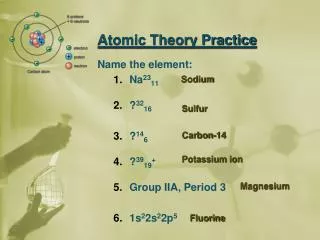
Atomic Theory Practice Name the element: • Na2311 • ?3216 • ?146 • ?3919+ • Group IIA, Period 3 • 1s22s22p5 Sodium Sulfur Carbon-14 Potassium ion Magnesium Fluorine
MOLECULAR MADNESS Bonding, Shape, Polarity & Reactions
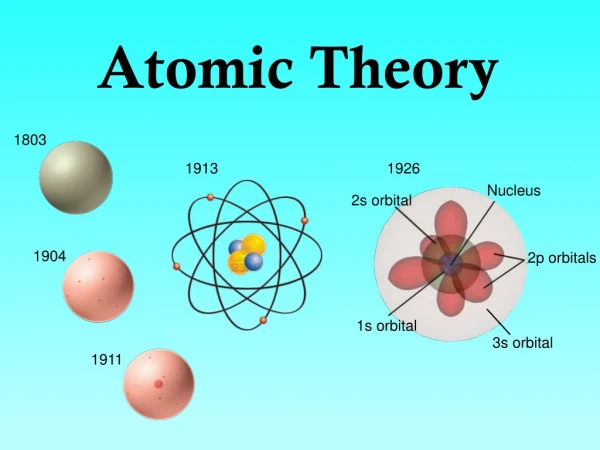
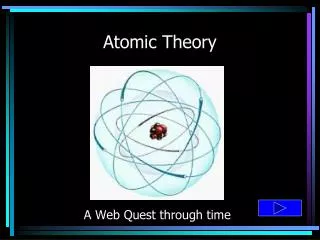
ATOMIC THEORY • Atoms composed of subatomic particles
Exothermic (heat emitting, i.e. chem warm up :) Exercise #1 A. Draw the Lewis structure for Carbon. B. Why do atoms bond with one another? C. What are the 2 main types of intramolecular bonds? To fill their valence shell (Octet Rule) Ionic – transfer electrons Covalent – share electrons
BONDING Ionic Bonds Transferred electrons Formed between metals & nonmetals Metals = + cations w/full valence Nonmetals = - anions w/full valence Opposing charges attract STRONGLY Ionic Compounds High melting pts Good electrical conductors in solution
Ionic Bonding - Lewis Dot structures http://hyperphysics.phy-astr.gsu.edu/hbase/chemical/bond.html
BONDING Non-polar Covalent e- shared equally atoms w/similar electronegativities Polar Covalent e- shared Unequally atoms w/different electronegativities Covalent Bonds – shared electrons http://iws.collin.edu/biopage/faculty/mcculloch/1406/outlines/chapter%202/chap02.html
Covalent Bonding - Lewis Dot structures Polar or Nonpolar? Nonpolar Polar or Nonpolar? Nonpolar Polar or Nonpolar? Polar http://hyperphysics.phy-astr.gsu.edu/hbase/chemical/bond.html
Polarity in Molecules Nonpolar Molecules • Very little attraction between them • Generally gases @ room temp • Ex: CO2 Polar Molecules • Have dipoles (ends with opposite charges) • Electrons pulled toward more electronegative atom • Attraction between dipoles of adjacent molecules • Ex: H2O CO2 http://www.exo.net/~pauld/workshops/Greenhouse%20Effect/greenhouse.html http://www.chem1.com/acad/webtext/states/interact.html http://www.chem.umass.edu/genchem/whelan/class_images/Structure_of_Water.jpg
VSEPR Theory • Valence Shell Electron Pair Repulsion • Outer shell e- pair up • Arrange themselves as far apart from other pairs as possible since they repel other neg. charges • Responsible for molecular shape Sample Shapes chemistry.gcsu.edu Bent
http://www.chem.latech.edu/~upali/chem101/101MSJc8.htm Bond Length Periodic Trend • as you move down group and right to left within a period, bond length increases • Same as atomic radius • Double & triple bonds are shorter than single Radius & bond length increase http://chemwiki.ucdavis.edu/Theoretical_Chemistry/Chemical_Bonding/Bond_Order_and_Lengths
Intermolecular Forces Hydrogen Bonds • Formed between molecules whose atoms have extremely different electronegativities • Most electronegative atoms: F, O, N bonded to • Least electronegative atom: H • Strong intermolecular force, causing high boiling points • Not nearly as strong as INTRAmolecular bonds like covalent
Endergonic(chem energy INTO your brain :)Exercise #1 • In textbook, • Read p.275 • Answer the following questions from p.276-77: • MC 1,2,6,10 • T/F 13,18 • CM 22,24,26
Chemical Reactions • Substances converted into NEW substances w/NEW properties Reactants – What goes in Products – What comes out ReactantsProducts Glucose + Oxygen Carbon Dioxide + Water C6H12O6 + O2 CO2 + H2O C6H12O6 + 6O2 6CO2 + 6H2O C6H12O6(s) + O2(g) CO2(g) + H2O(l) Words Formulas Balanced Equation Complete Equation
Writing & Balancing Chemical Equations • Going from word formula to balanced… • Remember your naming rules! • Ionic compounds – cation (+) first then anion (-) • # of + charges must equal # of - charges • Ex: Sodium + Chlorine Sodium Chloride Na+ + Cl- NaCl • Ex: Aluminum nitrate + Iron chloride Iron Nitrate + Aluminum Chloride Al(NO3)3 + FeCl2 Fe(NO3)2 + AlCl3 • Covalent compounds – use the number prefixes to indicate numbers of atoms • Carbon + Chlorine Carbon Tetrachloride C + 2Cl2 CCl4
Cations +1 Group 1 atoms Ammonium NH4+1 +2 Group 2 atoms Anions -1 Group 7 atoms Chlorate = ClO3-1 Nitrate = NO3-1 Hydroxide = OH-1 -2 Group 6 atoms Sulfate = SO4-2 Carbonate = CO3-2 -3 Group 5 atoms Phosphate = PO4-3 Ions & Charges
Naming & Writing Gases & Acids Gases • The name of the element followed by the word gas is always a diatomic molecule • Ex: Oxygen gas = O2 • Ex: Chlorine gas = Cl2 • Ex: Hydrogen gas = H2 Acids • The name of an ion followed by the word acid means you add the appropriate # of H’s in front of the ion • The # of H’s equals the - charge of the anion • Ex: Hydrochloric acid = HCl • Ex: Sulfuric acid = H2SO4 • Ex: Phosphoric acid = H3PO4
Types of Chemical Reactions • Synthesis Reaction • aka direct combination reaction • 2 or more reactants come together to form a single product • A + B AB • 2Na + Cl2 2NaCl • Decomposition Reaction • Single compound broken down into 2 or more smaller products • AB A + B • 2H2O 2H2 + O2
Types of Chemical Reactions • Single Replacement Reaction • Uncombined element takes the place of another element within a compound • A + BX AX + B • Mg + CuSO4 MgSO4 + Cu • More active elements replace less active ones • Activity level shown in activity series • If uncombined element NOT more active, then no reaction takes place
Types of Chemical Reactions • Double Replacement Reaction • Atoms or ions from 2 different compounds replace each other • AX + BY AY + BX • CaCO3 + 2HCl CaCl2+ H2CO3