Download
1 / 5
50 likes | 193 Vues
This guide explores the English structure of using "going to" for expressing future plans. It covers positive and negative sentences with examples, such as "I am going to have a new car" and "She isn't going to study at university." The format for forming questions is also explained, with examples like "What is he going to do tomorrow?" This resource is essential for learners wishing to master the construction of future plans in English effectively.

E N D
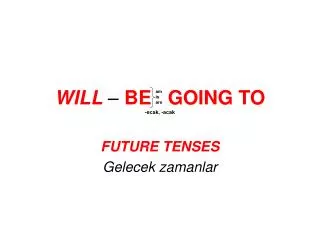
Be going to • Se používá pro vyjádření našich plánů do budoucnosti • I am going to have a new car.
Forma – Kladná věta Osoba + am / is / are + going to + sloveso • She is going to be a doctor. • We are going to travel a lot. • I am going to sleep.
Forma – Záporná věta Osoba + am / is / are + not + going to + sloveso • She isn´t going to study at university. • We aren´t going to do our homework. • I am going to go to school tomorrow.
Forma – Otázka (Wh…) Am / is / are + osoba + going to + sloveso • What is he going to do tomorrow? • Why are we going to tidy up? • Where are you going to go on holiday?