Understanding Matching Grants for International Humanitarian Projects
Matching Grants are vital for supporting international humanitarian service projects. TRF facilitates contributions from clubs and districts across multiple countries, encouraging collaboration. This comprehensive overview outlines the Matching Grant process, including preparation, application completion, and submission guidelines. Clubs draft applications, which are reviewed by Regional Coordinators before final approval. Key aspects include project description, budget details, financial planning, and necessary authorizations. Understanding these steps is crucial for successful grant applications and ensuring project continuity after funding.

Understanding Matching Grants for International Humanitarian Projects
E N D
Presentation Transcript
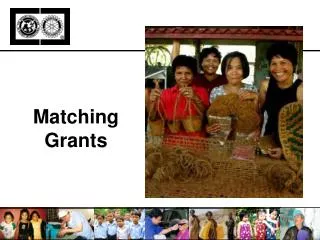
What is a Matching Grants? • Support international humanitarian service projects • TRF matches contributions by clubs and districts in two or more countries • Clubs collaborate
Matching Grants • Overview of the MG process • Preparing to complete an application • Completing application, step-by-step • Helpful hints
Overview of Process • Clubs drafts application • Application reviewed by Region Coordinator Latin America & Caribbean – Jim Peterson Africa & Europe – Denny Skinner Asia – Rachel Litwiller • Application approved by DGSC Chair
Overview of Process • Application received, acknowledged • Application reviewed • Grant approved • Agreement form, contributions, payee information returned to TRF
Overview of Process • Payment issued • Reports submitted • Final report reviewed • File closed
Preparations • Read Matching Grant application • Visit the Humanitarian Grants Web Page • Read The Guide to Matching Grants • Inform/request support from the district MG Region Coordinator
Application Deadlines • Applications received July 1 - March 31 • Applications approved Aug 1 – May 15
Project Description • Who, what, where, when and how • Continuity of project after the grant • Detailed description of Rotarian activities
Host & International Partners • Club information • Provide all contact information • Contacts must be in good standing with RI • All contacts must be in sponsoring club
Project Budget • Itemize expenditures • Supplier names must be provided • Invoices not required, but may be requested • Indicate exchange rate
Project Financing • Financing must equal budget • Calculate in US$ • Indicate cash or DDF • DRFC chair and DG must authorize use of DDF
Project Planning • All questions must be answered • Equipment cannot be owned by Rotarians or Rotary clubs • Customs clearance must be arranged
Competitive Grants • Grant requests from US$25,001-$200,000 • Community Needs Assessment
Authorizations • Authorizations signed by current year officers • Club-sponsored vs. district-sponsored • All signatures must be submitted with the application (otherwise application will not be processed)
Cooperating Organizations • Cooperating Organization vs. beneficiary • Letter of participation from Cooperating Org • Letter of endorsement from host partner
Final Report • Both sponsors are responsible for reports • Should include input from both sponsors • Club / district handling grant funds should take the lead in reporting
DGSC Review • District grants subcommittee must confirm that the application is complete • Host or international partner • Does not guarantee Trustee approval
Completion Checklist • Helpful to ensure that the application is accurate and complete
MG#71872 – RCs of Sandton, SA & Fairfield & Kalona, IA & Weston, FL