Exploring Ancient Civilizations: Egypt, Hittites, Phoenicians, and Assyrians
Dive into the complexities of ancient civilizations, focusing on Egypt's achievements under notable pharaohs like Ramses II and Tutankhamun. Discover the significance of trade centers, Nile irrigation, and advanced technologies through the lens of daily life, specialized workers, and monumental constructions such as the Great Pyramid. Examine the Hittite Empire's military prowess, the Phoenicians' maritime trade, and their contributions to writing and civilization. Uncover the dynamics of power, culture, and innovation in the ancient Middle East.

Exploring Ancient Civilizations: Egypt, Hittites, Phoenicians, and Assyrians
E N D
Presentation Transcript
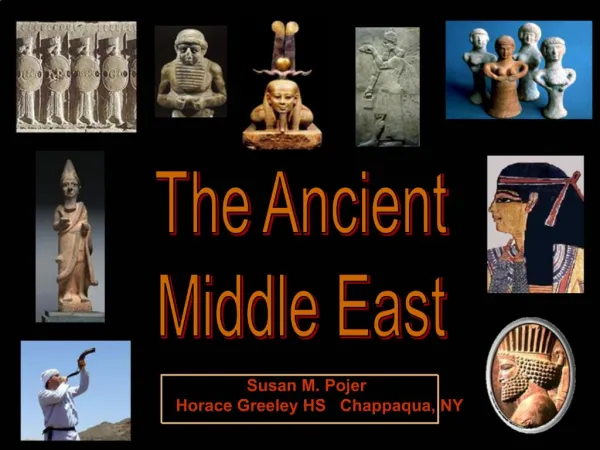
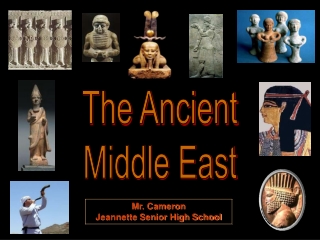
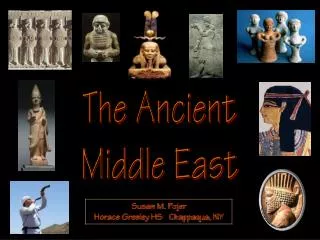
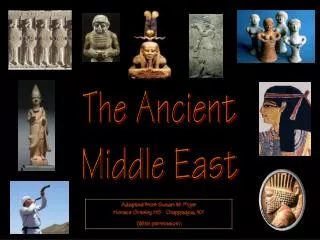
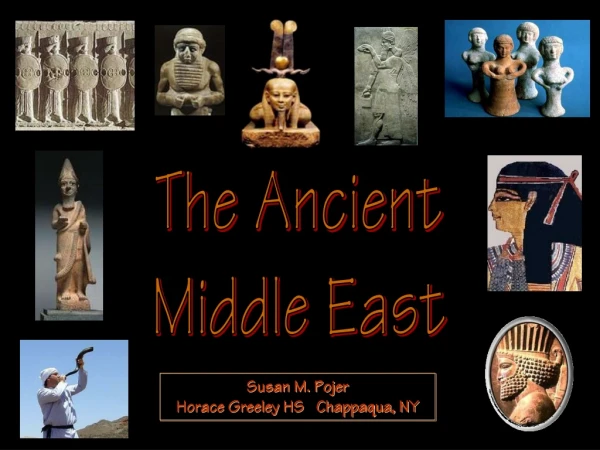
The Ancient Middle East Adopted from Susan M. PojerHorace Greeley HS Chappaqua, NY
Select which of the 5 Things Needed For A Civilization the pictures go with
Ramses on the Delta Cites as centers of trade
Nile Irrigation-the Shaduf Advanced Technologies
Menes: Unifier of Upper & Lower Egypt Institutions - Government c. 3050 B. C. E. ?
Ancient Egyptian Housing Middle Class Homes Specialized Workers-stone masons Peasant Homes
Scenes of Ancient EgyptianDaily Life Specialized Workers-farmers, fisherman, metal workers
Specialized Workers-Scribes and Record Keeping Egyptian Scribe
Papyrus Paper Hieratic Scroll Piece Papyrus Plant
Egyptian Math & Draftsmenship What number is this? 2,525
Champollion & the Rosetta Stone Hieroglyphic High Egyptian Demotic Common Egyption Greek Language of those that ruled at the time
Some Famous Egyptian Pharaohs Tutankhamon1336-1327 B. C. E. Thutmose III1504-1450 B. C. E. Ramses II1279-1212 B. C. E.
Ankhenaton: First Monotheist? 1352-1336 B. C. E.
Giza Pyramid Complex Did slaves build the pyramids or skilled workers?
Abu Simbel:Monument to Ramses II 1279-1213 B. C. Saved from the lake created by Aswan Dam
The Battle of Kadesh Ramses II at Kadesh Treaty of Kadesh
3B. The Phoenicians: Transmitters of Civilizations
The Assyrian Empire
Assyrian Military Power Assyrian soldiers carrying away the enemy’s gods.