The Digestive System
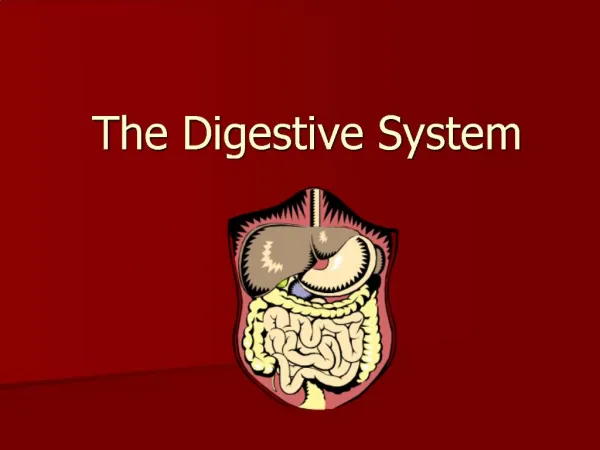
The human digestive system plays a crucial role in breaking down food into absorbable molecules. This intricate process, which begins in the mouth, involves two types of digestion: mechanical digestion and chemical digestion. Mechanical digestion occurs through chewing and mixing food, while chemical digestion involves enzymes that catalyze reactions to break down complex molecules. The digestive system consists of the digestive tract, including the mouth, esophagus, stomach, small intestine, large intestine, rectum, and anus, and accessory organs such as the tongue, teeth, salivary glands, liver, gallbladder, and pancreas.

The Digestive System
E N D
Presentation Transcript
The Digestive System Standard: Explain the role of the human body’s major organ systems
What is digestion? • The process that breaks down food into small molecules so that they can be absorbed and moved into the blood. • Begins in the mouth
What are the two types of digestion? • Mechanical digestion -> takes place when food is chewed, mixed, and churned • Chemical digestion -> occurs when chemical reactions occur that break down large molecules of food into smaller ones
How is chemical digestion possible? • Enzymes a type of protein that speeds up the rate of a chemical reaction in your body.
The organs of the digestive system can be divided into two parts… • The digestive tract (food passes directly through these organs) • The accessory organs (food doesn’t pass through these organs, but the organs are important in mechanical and chemical digestion)
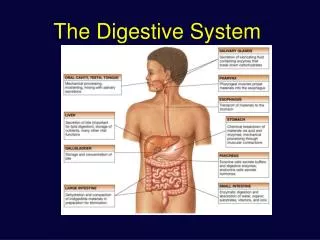
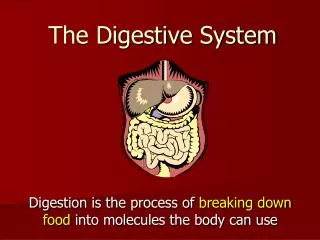
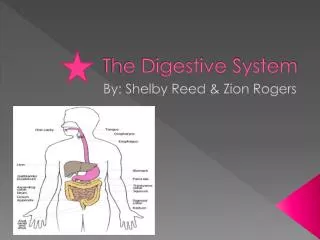
What organs are part of the digestive tract? • Mouth, esophagus, stomach, small intestine, large intestine, rectum, and anus
What organs are part of the accessory organs? • Tongue, teeth, salivary glands, liver, gallbladder, and pancreas
Digestive System Pictionary • Mechanical digestion • Chemical digestion • Enzyme • Chyme