Applying Psychology to Teaching: Enhancing Learning Through Motivation and Information Processing
This guide explores the intersection of psychology and education, emphasizing the necessity of understanding student motivation and the environment conducive to learning. Acknowledging that effective teaching starts with reaching students where they are, it outlines strategies for creating a respectful and engaging classroom. The importance of recognizing diverse learning styles and ensuring relevance to students' cultural identities is highlighted. Additionally, it discusses memory-directed and comprehension-directed learning tactics to enhance information retention and comprehension.

Applying Psychology to Teaching: Enhancing Learning Through Motivation and Information Processing
E N D
Presentation Transcript
Learning and information processing Applying Psychology to Teaching
Introduction:Before you can teach them, you have to reach them “Start where people are before you take them where you want them to be” (Anon)
Motivation • It is nearly impossible to motivate someone else, unless you can tap into motivation that already exists.
Motivation • Motivation is important to learning, and feeling valued as a human being is a powerful motivator • Create a safe environment, i.e.: • Structure • Predictability • Sense of control
Creating a respectful and learning environment • Is my curriculum relevant to my students, their interests, ambitions and cultural identity? • Awareness of students’ different learning styles and adapting teaching accordingly • Do books and other teaching material reflect diversity
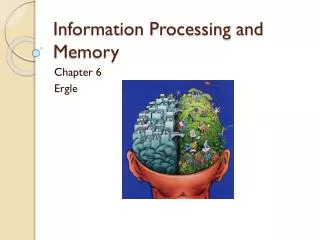
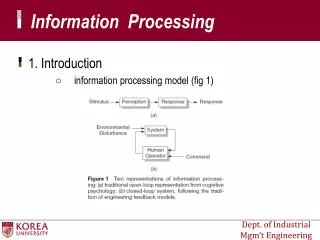
Information processing • Two types of learning tactics, i.e.: • Memory-directed tactics: Accurate storage and retrieval of information • Comprehension-directed tactics: Aid in understanding the meaning of ideas and their interrelationships