Pediatric Preparedness
This report summarizes a vital workshop conducted in April 2013 by the Minnesota Department of Health and FEMA. It addressed critical aspects of pediatric preparedness in emergency scenarios, emphasizing key differences in child care during crises. The agenda included scenario discussions, identification of issues related to transportation, supply management, and special considerations for pediatric patients in emergencies. The workshop also focused on sharing resources and best practices for effective pediatric care, aiming to improve regional collaboration and response strategies.

Pediatric Preparedness
E N D
Presentation Transcript
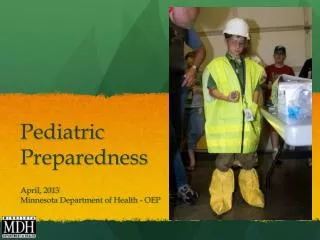
Pediatric Preparedness April, 2013 Minnesota Department of Health - OEP
Agenda • Introductions – 15 minutes • Scenario discussion – 40 minutes • Key differences in the care of children – 1h • Introduction to preparedness materials – 45 min • Table discussion – issues and opportunities – including report-out – 45 minutes
Workgroup – Thank you! • Donna Blomquist • Christine Chell • Chuck Hartsfield • Kayla Keigly • Paula Kocken • Kristin Kim • Don Sheldrew • John Hick • Kristi Moline • Kjelsey Kluge • Tom Schrupp • Julie Johnson
Process and Timeline • Identified outcomes: early 2012 • Facility pediatric annex template • Resource manual for pediatric preparedness • Regional planning and education • Workgroup meetings – 2012-2013 • Literature review / review of available resources - 2012 • Write, review, revise! – 2012 • Regional roll-out – April, 2013
Issue identification • Blizzard impact on hospital operations? • Staff? • Supplies? • Patient care? • Environment of care? • Special considerations?
Issues – Bus Crash • Transportation • Pre-hospital treatment • Safety • Environment
Alerting / Command • Activation / notification process? • Who reports? • What resources can you get? • What outside resources do you have?
Bus Crash Victims • Truck driver is DRT • 3 critical • 5 year old, unresponsive, head injuries • 8 year old, severe shortness of breath • 6 year old, unresponsive, hypotensive • 6 serious – including open fractures, lacerations • 10 minor – small lacerations, bumps, sprains, strains • 8 no injuries
Treatment • Space issues? • Treatment – who gets a bed? Where do you put the greens? • Pediatric Safe area • Supplies? • Staff? • Special considerations?
Transportation • How? • When? • Where? • Other measures?
Other scenarios • School related • Structural • HAZMAT • Mass violence • Infectious • HAZMAT – Hg, CO, Chlorine, household chemicals, agricultural • Transportation
Big issues for small kids? • Preparedness • Space • Supplies • Staff • Special