Essential Emergency Preparedness: Protect Your Family and Community
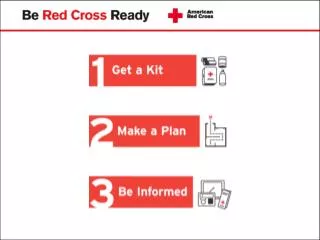
Learn how to prepare for emergencies and ensure the safety of your loved ones and community. Discover the importance of creating a disaster supplies kit that includes essentials like water, food, first aid kits, and communication tools. Understand the three vital actions: Get a Kit, Make a Plan, and Be Informed. This guide provides practical steps for preparing for various emergencies while encouraging community involvement. Join us to become a proactive member of your community and help save lives during critical situations.

Essential Emergency Preparedness: Protect Your Family and Community
E N D
Presentation Transcript
Preparedness • Do you know what to do in the event of an emergency? • Do you want to help make your family and community safer? • Do you want to help save a life?
Get a Kit A disaster supplies kit should include: • Water
Get a Kit A disaster supplies kit should include: • Water • Food and a manual can opener
Get a Kit A disaster supplies kit should include: • Water • Food and a manual can opener • Flashlight, alternative powered or extra, fresh batteries
Get a Kit A disaster supplies kit should include: • Water • Food and a manual can opener • Flashlight, alternative powered or extra, fresh batteries • First aid kit For more information and to purchase products from the family of Emergency Supplies kits and First Aid kits go to www.redcross.org
Get a Kit A disaster supplies kit should include: • Water • Food and a manual can opener • Flashlights and batteries, or alternative power • First aid kit • Battery-powered or alternative powered radio • Tools
Get a Kit A disaster supplies kit should include: • Water • Food and a manual can opener • Flashlights and batteries • First aid kit • Battery-powered radio • Tools • Duct tape and plastic sheeting
Get a Kit A disaster supplies kit should also include: • Clothing and bedding
Get a Kit A disaster supplies kit should include: • Clothing and bedding • Prescription and non-prescription medications
Get a Kit A disaster supplies kit should include: • Clothing and bedding • Prescription and non-prescription medications • Pet supplies
Get a Kit A disaster supplies kit should include: • Clothing and bedding • Prescription and non-prescription medications • Pet supplies • Cash and coins
Get a Kit A disaster supplies kit should include: • Clothing and bedding • Prescription and non-prescription medications • Pet supplies • Cash and coins • Sanitary supplies
Get a Kit A disaster supplies kit should include: • Clothing and bedding • Prescription and non-prescription medications • Pet supplies • Cash and coins • Sanitary supplies • Important papers
Get a Kit A disaster supplies kit should include: • Clothing and bedding • Prescription and non-prescription medications • Pet supplies • Cash and coins • Sanitary supplies • Important papers • Contact information and a map
Get a Kit Kits are available from the Red Cross to help get you started
Make a Plan • Talk
Make a Plan Regional Disaster Specific discussion
Make a Plan • Talk • Plan
Make a Plan • Talk • Plan • Learn
Make a Plan • Talk • Plan • Learn • Tell
Make a Plan • Talk • Plan • Learn • Tell • Practice
Make a Plan Become a regular and frequent blood donor. How to become a donor: [Customize by inserting donor information here]
Make a Plan Volunteer
Make a Plan Volunteer Red Cross volunteer opportunities [Customize by listing current volunteer opportunities in your field unit.]
Know what may happen and how you can help Be Informed Identify how local authorities will notify you Learn what you can do to prepare Share what you have learned
The 3 C’s Check-Call-Care Always use the Emergency Action Steps: • Check the scene for safety, then check the victim; • Call 9-1-1, or your local emergency number to get advanced medical help; and • Give care to the injured person.
Be Informed [Customize by listing your field unit’s training schedule and enrollment information here]
Preparedness • Do you know what to do in the event of an emergency? • Do you want to help make your family and community safer? • Do you want to help save a life?