Understanding Brain Functions: From Reflexes to Higher Thinking
This overview explores the key components of the brain, including the brainstem, cerebellum, midbrain, thalamus, hypothalamus, and cerebrum. It highlights the roles of neurons and glial cells in supporting brain functions. The medulla oblongata and pons control vital bodily functions such as breathing and heart rate, while the cerebellum manages coordination and balance. The midbrain processes sensory information, and the thalamus directs it to appropriate cerebrum areas. The hypothalamus regulates hormones, body temperature, and homeostasis, paving the way for higher-order thinking in the cerebrum.

Understanding Brain Functions: From Reflexes to Higher Thinking
E N D
Presentation Transcript
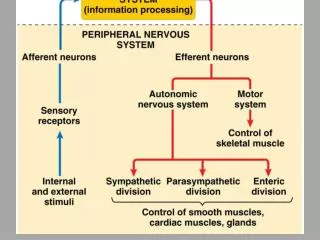
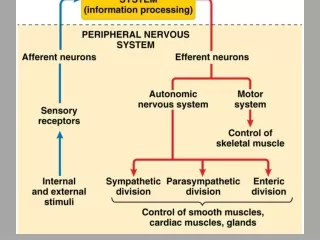
Rest and Digest Fight or Flight
The Brainstem * • The Medulla Oblongata and the Pons controls breathing, heart rate, digestion • The Cerebellum controls coordination of movement and balance (Karate; Dance. Separate Section of the brain) Pons Medulla obl cerebellum
The Midbrain midbrain • The Midbrain receives, integrates, and projects sensory information to the forebrain
Thalamus • Thalamus • conducts information to specific areas of cerebrum • _____________ • produces hormones and regulates body temperature, hunger, thirst, sexual response, circadian rhythms hypothalamus Hypothalamus
* • Cerebrum • with cortex and corpus callosum • higher thinking
Cerebrum And this one too!