Enhancing Energy Self-Sufficiency in the Technology Room with Wind Power
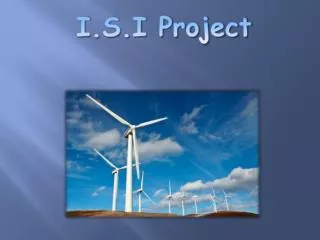
The I.S.I. Project aims to achieve self-sufficiency in electrical energy for the technology room using a 200-watt windmill. Key objectives include studying windmill operations, assessing capacity, and addressing safety concerns during the project. Despite challenges, such as low energy output (200W versus a requirement of 8755W), the team explored alternative solutions, including implementing energy-efficient LED lighting and considering solar panels to complement energy needs. This project highlights innovative approaches and practical solutions for achieving sustainable energy goals in educational settings.

Enhancing Energy Self-Sufficiency in the Technology Room with Wind Power
E N D
Presentation Transcript
Contents • Main goal • Operation of a windmill • Situation analysis • Process of the project • Conclusion
Main Targets To ensure the self-sufficiency in electrical energy of the technology room. Available equipment : • a 200 Watts windmill
Situation Analysis • Discovery of secondary targets: • to tackle the study of a windmill operation • to measure the capacitance of our windmill • to think about the final results • To think about the constraints we will meet during the project: • to think about the safety in the classroom • to get a low energy production • To find solutions: • to dismantle the blades for the safety • to find an adaptable solution to meet the expected results
Process of the project • To research (windmill operation) • Manipulations (measures, calculations,…) • To look for a system : a crank (for the safety) • New manipulations • Results and solutions
Conclusion The final results are too low (we got around 200W and the total need for the classroom is about 8755W), so we had to find a solution : We decided to take into account only lightings and to use a lighting which consumes less (LED floodlight). Besides, thanks to many windows in the classroom, we don’t have to use any ligthings and we can find a complement with solar panels according to the needs. The lighting can become independent
Total need in the ISI classroom Previous
Need for the lighting Previous