The Reading Process
This guide outlines the five essential stages of the reading process to enhance comprehension and engagement. Beginning with pre-reading strategies that activate background knowledge and establish a reading purpose, it progresses through various reading techniques, including independent and guided reading. The following stages focus on responding to texts, exploring authorship, and applying skills through collaborative activities like Readers Theatre. This structured approach aims to improve students’ reading abilities while fostering a deeper appreciation for literature.

The Reading Process
E N D
Presentation Transcript
The Reading Process Monday, April 16, 2007
Purpose of Reading Process • Improve comprehension; • Organize work; • Clarify the purpose of activity.
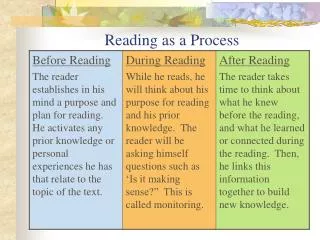
Stage 1: Pre-reading • Activating Background Knowledge • Setting Process • Planning for Reading
Stage 2: Reading • Independent Reading • Buddy Reading
Stage 2: Reading (cont.) • Guided Reading • Shared Reading • Reading Aloud
Stage 3: Responding • Writing in Reading Logs • Participation in Discussions
Stage 4: Exploring • Rereading the Selections • Examining the Author’s Craft • Focusing on Words and Sentences • Teaching Mini-lessons
Stage 5: Applying • Readers Theatre • Class Collaborations • Reports