Understanding the Skin: Our Body's Largest Organ
90 likes | 194 Vues
Explore the layers, functions, and importance of the skin, including melanin production, sensory response, sweat gland functions, and healing processes like bruises and cuts. Discover how the skin regulates body temperature and waste elimination.


Understanding the Skin: Our Body's Largest Organ
E N D
Presentation Transcript
Ch. 6 Section 3 Skin Michelle Napier
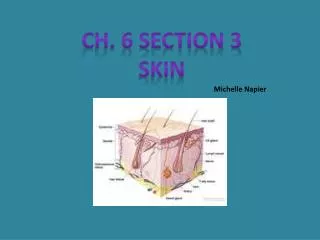
the largest organ of our body • made up of 3 basic layers 1. skin 2. layers of skin epidermis- outermost layer dermis- middle layer fatty layer- innermost layer
cells are dead and water repellant • new cells are produced constantly at the base of the epidermis • produces melanin 3. epidermis • pigment that protects skin and gives it its color • this is what makes tanning possible 4. melanin
5. dermis • thicker than the epidermis • contains blood vessels, nerves, muscles, oil, and sweat glands • holds fat
protection • sensory response • vitamin D formation- helps blood absorb calcium • regulates body temperature • helps the body get rid of waste 6. functions of the skin
7. heat and waste exchange • blood vessels in the skin expand and dilate which releases heat or holds heat in • as they expand, blood flow increases and heat is released • our skin holds about 3 million sweat glands
regulate body temperature • release waste • when vessels dilate, pores on the skin open and perspiration is released from sweat glands. This allows your body to cool off. • cells use energy and nutrients and have waste which is released through sweat 8. functions of sweat glands
9. bruises • blood vessels under the skin burst but skin stays in tact • red blood cells leak into tissues and a chemical called hemoglobin is released • hemoglobin is responsible for the different colors of bruises
a tear in the skin • scars are formed when large amounts of tissue build up under a cut 10. cut 11. skin grafts - pieces of skin cut from one part of the body and put on another part that was injured or burned