Download
1 / 25
250 likes | 375 Vues
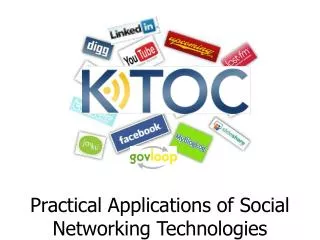
Social media has transformed how organizations communicate, becoming an essential tool rather than just a trend. This discussion explores the advantages of accessible media, highlighting unmediated audience access and interactive potential, alongside the challenges such as content control and intellectual property concerns. The strategy involves balancing rapid response with credibility and transparency without alienating audiences. By applying careful planning and a critical approach to online content, organizations can maximize the impact of their social networking efforts for enhanced outreach and engagement.

E N D
Advantages of Available Media • Unmediated access to potentially large audience • Cheap, but may require significant integration • Offers potential of significant audience interaction
Disadvantages of Available Media • Largest sites (Facebook, MySpace) frequently blocked from government networks • Agency cedes some control over page content • Some uncertainty about intellectual property rights • Requires staff commitment • Fluid “best practices”
How do we relinquish control of our web sites & keep them appropriate and responsible?
How do we keep our message clear in a sea of content we can’t control?
Insert REPLAY
Lessons Learned • Online outreach requires the same careful preparation & lead-time as conventional outreach • Assets must be deliberate & offer huge rewards • Start slow with no promised schedule, but start today • Go beyond standard materials in new platforms Apply the same level of scrutiny to how you post things as you do to what you post Be patient
Looking Forward • Work to avoid transparency creating barriers to discussion • Message don’t change, but platforms allow fresh approaches Apply the same level of scrutiny to how you post things as you do to what you post Be patient
Questions Julie Lorenz jlorenz@ksdot.org Patrick Quinn pquinn@ksdot.org