The Impact of Civil War Photography: Art, Truth, and Perception
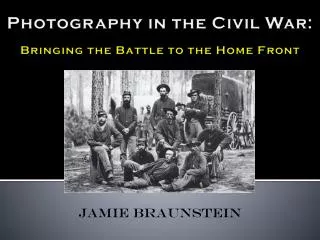
"Photography in the Civil War: Bringing the Battle to the Home Front" by Jamie Braunstein explores the profound effects of the first major conflict extensively documented through photography. With over 1 million battlefield photographs by pioneers like Matthew Brady and Alexander Gardner, citizens grappled with the harsh realities of war. The book discusses technological advances like wet-plate photography and stereo views. Through images like "Harvest of Death," it raises critical questions about photography's role in shaping public perception of war, the ethics of staging images, and the overall impact on society.

The Impact of Civil War Photography: Art, Truth, and Perception
E N D
Presentation Transcript
Photography in the Civil War: Bringing the Battle to the Home Front Jamie Braunstein
Why Focus on the Civil War? • First major conflict extensively photographed • Battle field photographs • 1 Million photographs • Images widely distributed and sold nationwide • Technological Advances in photography
Technological Advances • Wet-Plate Photography • Stereo-Views
Citizens Witness to Carnage “Incidents of the War: A Harvest of Death” “Bloody Lane”
Forming a Medical Perspective R.B. Bontecou
Political Figures Abraham Lincoln Ulysses S. Grant
Discussion Questions • Should photographers be allowed to take pictures of the battlefield? Overall, does this have a positive or negative impact on the public’s perception of war? • Some of the photographs taken by Matthew Brady and Alexander Gardner have been rumored to be staged. • If this is true, do you think the photographs would have had less of an impact had they not been staged? • What does photographers feeling the need to stage photographs say about how war-related information and media is relayed to the public? • What does this mean for the way we should approach war-related media?