The Art of Camouflage: Nature's Mastery in Color Change
160 likes | 312 Vues
Discover the incredible adaptations of various animals that showcase their camouflage skills. From the Arctic fox that changes its coat color with the seasons, to the cryptic frog that melds perfectly with leaves, many creatures employ these techniques for survival. Learn how a beetle blends into goldenrod flowers to evade predators, and how elk and lizards use their surroundings to remain hidden. This exploration highlights the importance of camouflage in nature, offering insights into how these fascinating species protect themselves from danger.


The Art of Camouflage: Nature's Mastery in Color Change
E N D
Presentation Transcript
Examples of Camouflage By Mrs. White Fredrick Douglass Elementary School
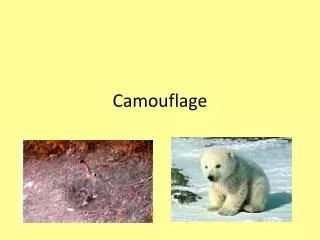
Color Change Reproduced with permission of the Minister of Public Works & Government Services Canada, 2001As the seasons change, the Arctic fox changes the color of its coat. In the spring and summer, it has a dark coat, to match the brown dirt in its environment. In the fall and winter, it turns white, to match the surrounding snow.
Blending In cryptic frog - This species has developed a coloring, texture and form that are similar to the leaves found in its environment.
Beetle in Goldenrod flowers • This beetle's coloration provides effective camouflage, protecting it from predators like birds.
Mantis, Praying; on juniper bush • Look closely: There's a praying mantis on this juniper bush. The thin grasshopper relatives benefit from camouflage that makes them nearly invisible on certain kinds of plants and shrubs.
Elk Camouflaging itself • Elk camouflages itself against environment. Yellowstone National Park, North America.
Desert gecko • Notice how well camouflaged this little lizard is.
Lizard, Anole • Anoles are able to change color quickly, making it difficult for predators to find them.