Download
1 / 10
100 likes | 215 Vues
This resource explores the concepts of population density and distribution, highlighting their significance in understanding human settlements. You will learn how to calculate various population density metrics, such as arithmetic and physiologic density, and how these calculations inform us about where people live. Key factors influencing population density and distribution will also be examined, including economic and physical geography. The accompanying worksheet provides practical exercises for calculating population densities and understanding the spatial patterns of populations. Engage with this material to gain insights into global population dynamics.

E N D
Population Density & Distribution An introduction, exploration and application
Global Connections: p.182-189 Population Density Worksheet Lesson resources
DENSITY vs. DISTRIBUTION # of people/km2 Total population/total land area pattern of where people live
DENSITY vs. DISTRIBUTION What factors impact how many people share one space? What might cause… …an increase in density? …a decrease ? (think indicators of development) What factors impact where a population is located within a physical region?
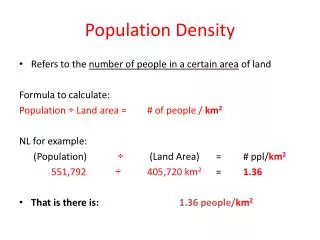
APD = average # of people /unit of land APD = Total Population Total Land Area Arithmetic population density
PPD = average # of people/unit of arable land ***Arable: land suitable for agricultural use PPD = Total Population Total Cultivated Area physiologic population density
EXPLORATION & APPLICATION READ TEXTBOOK P.182-189 Complete worksheet All calculations on worksheet All answers on looseleaf Answers on computer printed to pass in