Understanding the Three Types of Future in English
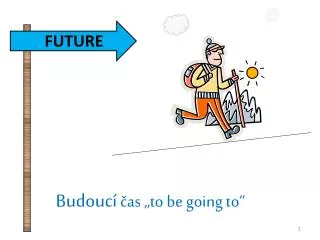
In English, there are three distinct types of future: the Intentional Future, the Future with "Will," and the Arranged Future. The Arranged Future uses the present continuous to describe future events that are already planned, such as "I’m meeting a friend this evening." The Intentional Future utilizes "going to" for pre-arranged plans, like "She’s going to fly to Rome next week." The Will Future expresses spontaneous decisions, predictions, and offers, such as "I will call you tomorrow." Master these types for better communication!

Understanding the Three Types of Future in English
E N D
Presentation Transcript
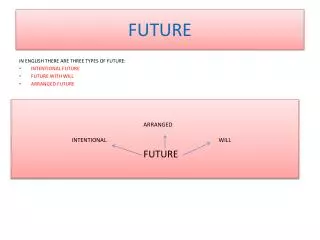
FUTURE IN ENGLISH THERE ARE THREE TYPES OF FUTURE: • INTENTIONAL FUTURE • FUTURE WITH WILL • ARRANGED FUTURE ARRANGED INTENTIONALWILL FUTURE
ARRANGED FUTURE WHEN DO WE USE THE ARRANGED FUTURE? WE USE THE PRESENT CONTINUOS FOR SOMETHING WE HAVE ALREADY ARRANGED TO DO IN THE FUTURE. EXAMPLE: I’m meeting a friend this evening I’m not meeting a friend this evening Are you meeting a friend this evening?
INTENTIONAL FUTURE WHEN DO WE USE THE INTENTIONAL FUTURE? We use ‘going to’ to talk about something wehavealreadyarrangedto do in the future. EXAMPLE: She’s going to fly to Rome next week She isn’t going to fly to Rome next week Is She going to fly to Rome next week?
WILL FUTURE WHEN DO WE USE THE WILL FUTURE? • We use will when we decide to do something at the moment we speak. • We use will when we provide information about the future • We use will when we make predictions • We use will when we offer to do something • We use will when we ask somebody to do something • We use will when we promise to do something EXAMPLE: • I will call you tomorrow • It’s late to start cooking. • I’llorder some pizzas. • We’ll arrive at … • They will open the new • stadium the next year • I’ll give you money • Will you help David? • Will you give me …? • We won’t tell your parents