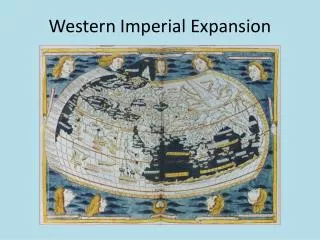
Western Imperial Expansion
170 likes | 315 Vues
This text delves into the motives behind Western imperial expansion, exploring the driving forces of God, Gold, and Glory. It discusses how new maritime technologies and improved navigation tools, such as the astrolabe and mariner’s compass, facilitated exploration. It examines the phases of exploration from Old Imperialism (1492-1776) to New Imperialism (1870s-1945), highlighting significant figures like Columbus, Magellan, and the Treaty of Tordesillas. The text also addresses the outcomes of exploration, including conquests, the Columbian Exchange, and the trans-Atlantic slave trade.


Western Imperial Expansion
E N D
Presentation Transcript
Motives for Exploration • God….missionary urge • Gold… profit, greed • Glory…adventure and honor
New maritime Technologies Better mapsMercator projection Hartman Astrolabe(1532) Sextant Mariner’s Compass
New Weapons Technology Caravel Wheel-Lock pistol
Phases of Exploration • Old Imperialism , 1492-1776 • New Imperialism, 1870s-1945 Forms • Settlement colonies • Trading empires
Portuagal Prince Henry the Navigator Of the Royal House of Aviz School for Mariners, 1419
Portuguese Explores • Dias • Vasco da Gama • Cabral
Spain Christopher Columbus, 1492
4 Voyages of Columbus 1492-1504
Amerigo Vespucci 1499-1502
Ferdinand Magellan1st Circumnavigation of the World 1519-1522
Spanish Conquests: The Aztecs VS Montezuma II Cortez
Conquests: the Incas VS Atahualpa Pizarro