
SlideServe
Menu
Préférences
© SlideServe · v2026

Agricultural Biotechnology

hei avatar
18 diapositives · 582 Views · Aug 21, 2012

Agricultural Biotechnology. Altering Genes in Plants to Fight Pests and Improve Nutrition. Add gene. mass of cells (callus). new plant. Unique Methods for Plants. Entire plants can be cultivated from a single non-reproductive cell. cell with new gene. Unique Methods for Plants.
Agricultural Biotechnology - slide 1
01 / 18Agricultural Biotechnology
1 / 17

Télécharger la présentation

Agricultural Biotechnology
Une image / un lien ci-dessous est fourni (tel quel) pour télécharger la présentation

Politique de téléchargement : le contenu du site vous est fourni TEL QUEL pour votre information et votre usage personnel ; il ne peut être vendu, concédé sous licence ni partagé sur d’autres sites sans l’accord de son auteur.Le contenu vous est fourni TEL QUEL, pour votre information et votre usage personnel uniquement. Téléchargez la présentation en cliquant sur ce lien. Lors du téléchargement, si vous ne parvenez pas à télécharger une présentation, l’éditeur a peut-être supprimé le fichier de son serveur.Pendant le téléchargement, si vous ne parvenez pas à obtenir une présentation, le fichier a peut-être été supprimé par l’éditeur.

F I N

Plus de contenu associé

Transcription de la présentation
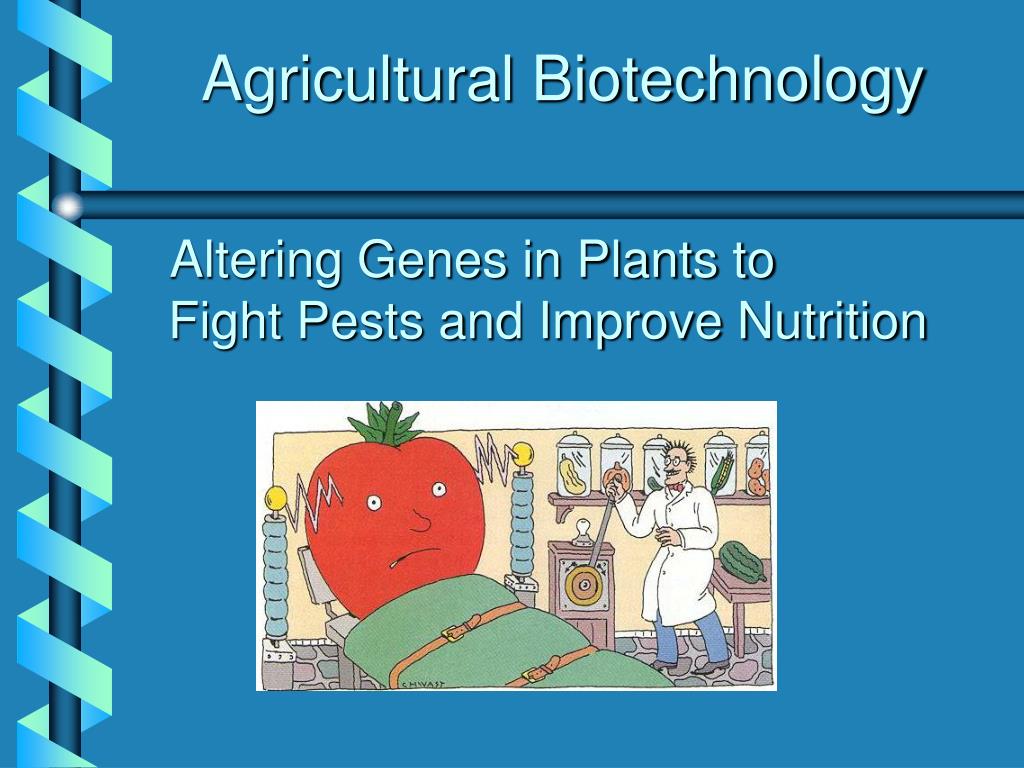
  1. Agricultural Biotechnology Altering Genes in Plants to Fight Pests and Improve Nutrition

  2. Add gene mass of cells (callus) new plant Unique Methods for Plants Entire plants can be cultivated from a single non-reproductive cell cell with new gene

  3. Unique Methods for Plants Rhizosecretion • Transgenic plant grown in water • Expression of gene in root cells • Secretion of gene product into surrounding medium

  4. Tools of Agricultural Biotechnology Vectors

  5. Ti Plasmid Tumor-inducing plasmid from bacteria that integrates into plant DNA • Tumor-inducing genes removed • Insertion genes retained • Foreign genes positioned after bacterial promoter • Antibiotic resistance gene as marker

  6. Clarification Pause • With a partner, identify differences in biotechnological methods used for plants and animals • items to consider • gene delivery • transgenic organisms • gene expression • collection of the gene product

  7. Plant Improvements Resistance to Pests Bt Corn: Producesits own Pesticide

  8. Plant Improvements Resistance to Pests

  9. Plant Improvements Resistance to Herbicides

  10. Effects of Treatment with Roundup Roundup Ready Soybeans Traditional Soybeans

  11. Plant Improvements Improved Food Quality Flavr-Savr Tomatosoftens more slowly after ripening

  12. Plant Improvements Improved Food Quality

  13. Template Original Gene Antisense construct 5’-ATGCCAGCGGAC-3’ 3’-TACGGTCGCCTG-5’ 3’-TACGGTCGCCTG-5’ 5’-ATGCCAGCGGAC-3’ Sensestrand 5’-AUGCCAGCGGAC-3’ mRNA Antisense product 3’-UACGGUCGCCUG-5’ AUGCCAGCGGAC mRNA Antisense product UACGGUCGCCUG Antisense Technology Blocks the expression of a gene by producing a product that combines with mRNA from the gene Promoter Promoter mRNA cannot be translated

  14. “Golden” rice Plant Improvements Improved Food Quality

  15. Plant Improvements Pharmaceutical Production in Plants

  16. Plant Improvements Textile, paper and wood products

  17. Applying Your Knowledge • Golden Rice • Improved Oil Canola • Roundup Ready Soybeans • Bt corn • Flavr-Savr Tomato • Which plant has a gene for an altered amino acid synthesis EPSPS enzyme? • Which plant makes its own pesticide? • Which plant provides beta-carotene, a precursor to Vitamin A?

  18. What Are the Concerns?