SlideServe
Menu
Préférences
© SlideServe · v2026

Rabies

herman-oneal avatar
13 diapositives · 760 Views · Nov 20, 2014

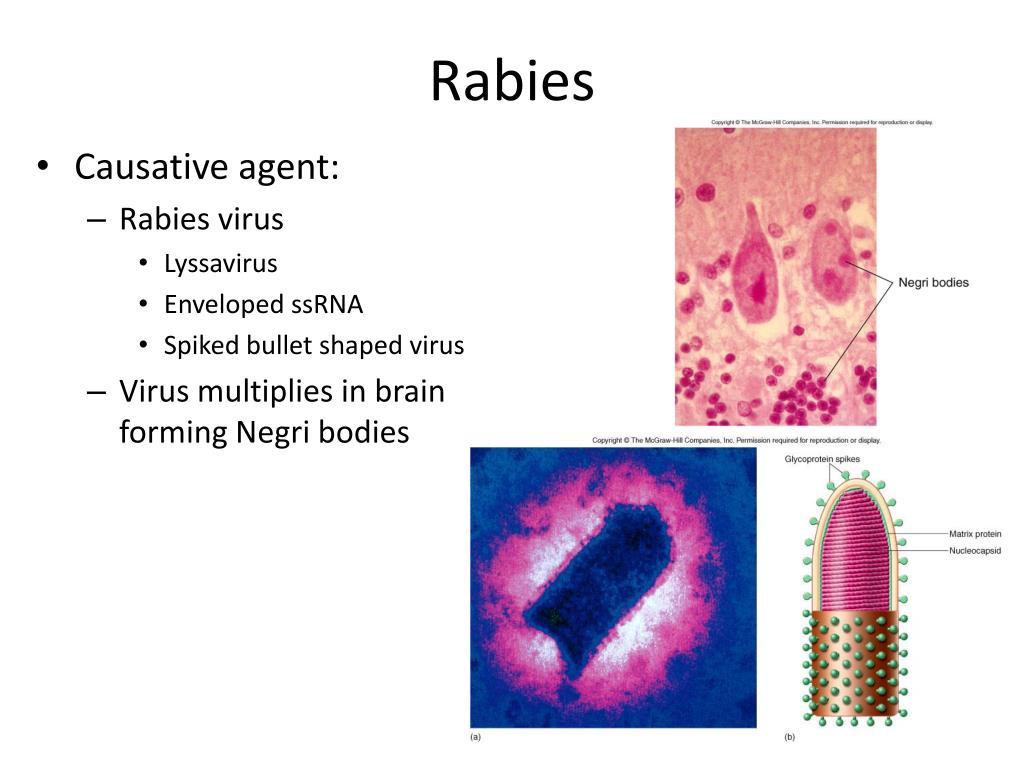
Rabies. Causative agent: Rabies virus Lyssavirus Enveloped ssRNA Spiked bullet shaped virus Virus multiplies in brain forming Negri bodies. Signs & Symptoms Pain and itching at site of infection Fever, headache, myalgia, sore throat, fatigue Progress rapidly to secondary symptoms
Rabies - slide 1
01 / 13Rabies
1 / 17

Télécharger la présentation

Rabies
Une image / un lien ci-dessous est fourni (tel quel) pour télécharger la présentation

Politique de téléchargement : le contenu du site vous est fourni TEL QUEL pour votre information et votre usage personnel ; il ne peut être vendu, concédé sous licence ni partagé sur d’autres sites sans l’accord de son auteur.Le contenu vous est fourni TEL QUEL, pour votre information et votre usage personnel uniquement. Téléchargez la présentation en cliquant sur ce lien. Lors du téléchargement, si vous ne parvenez pas à télécharger une présentation, l’éditeur a peut-être supprimé le fichier de son serveur.Pendant le téléchargement, si vous ne parvenez pas à obtenir une présentation, le fichier a peut-être été supprimé par l’éditeur.

F I N

Plus de contenu associé

Transcription de la présentation
  1. Rabies • Causative agent: • Rabies virus • Lyssavirus • Enveloped ssRNA • Spiked bullet shaped virus • Virus multiplies in brain forming Negri bodies

  2. Signs & Symptoms Pain and itching at site of infection Fever, headache, myalgia, sore throat, fatigue Progress rapidly to secondary symptoms Encephalitis, agitation, confusion, hallucinations, seizure, increased sensitivity to light and touch, coma Increased salivation and difficulty swallowing Results in frothing of mouth Hydrophobia occurs in 50% of cases About 50% of patients die within 4 days

  3. Virus enters through bite • Attaches to skeletal muscle cells triggering endocytosis • Pathogen moves across neuromuscular junction into nerve cell and travels to CNS • Slow moving so long incubation period • 1-2 months up to several years • Viruses travel back to the salivary glands and are secreted in saliva

  4. Epidemiology • Zoonotic • Skunks, raccoons and bats considered chief reservoir • 75% of human cases linked to bat bites • 0 to 4 reported cases in US annually

  5. Prevention • Vaccination of domestic animals and Vets • Wash wound immediately and thoroughly • apply antiseptic • Treatment • Risk lowered if vaccine administered as soon as possible • Interferon may be applied to wound • No effective treatment for rabies • Only six known survivors of disease

  6. Viral Encephalitis • Causative agent • Arboviruses • mosquitoes • Zoonotic diseases • Horses, birds and rodents • West Nile encephalitis, LaCrosse encephalitis, WEE, EEE, VEE, St. Louis encephalitis

  7. [INSERT TABLE 20.2]

  8. Signs & Symptoms • 3-7 day incubation period • Characterized by mild flu-like symptoms • Fever; headache; vomiting • One or more nervous system abnormalities • Disorientation, localized paralysis, deafness, seizures or coma

  9. Only minority infected develop encephalitis • Others may develop viral meningitis • Most reported human cases in immunosuppressd individuals • Elderly and very young • Healthy immune system typically fights off virus with only mild flu-like symptoms

  10. Viruses multiply at site of bite and in local lymph nodes • viremia • Virus crosses blood-brain barrier • Damages neurons • Causes extensive damage to brain tissue in severe cases • Progression of disease halted by neutralizing antibody • Mortality ranges from 2% to 50% depending of type of infecting agent and host

  11. Epidemiology • Disease are all zoonoses • Maintained naturally in birds and rodents • Humans are accidental hosts • LaCrosse encephalitis usually causes most reported cases

  12. West Nile an emerging disease in US • Appeared in New York in 1999

  13. Prevention • Eliminate vector habitat • Avoiding outdoor activities at night • Windows and porches properly screened • Use insect repellents and insecticides • Vaccine available for horses • Treatment • No proven antiviral therapy