
SlideServe
Menu
Préférences
© SlideServe · v2026

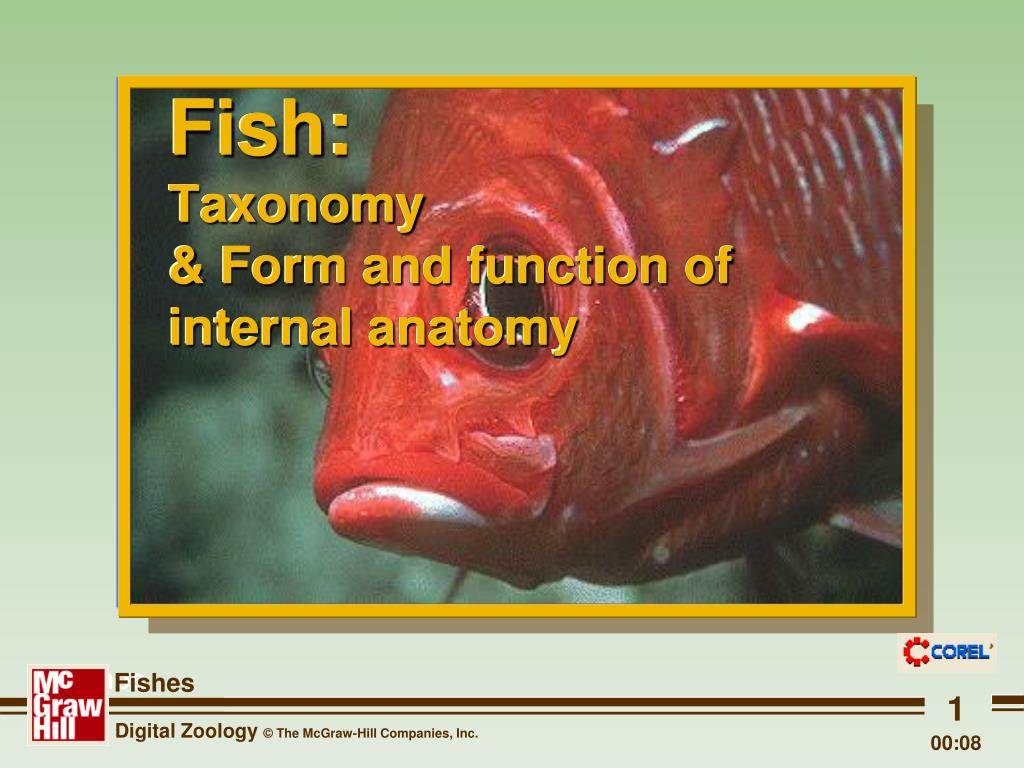
Fish: Taxonomy & Form and function of internal anatomy

hermione-mendez avatar
41 diapositives · 1.3K Views · Nov 05, 2014

Fish: Taxonomy & Form and function of internal anatomy. How do they compare?. Phylum Chordata evolution. Taxonomy : 3 of the 7 classes of chordates are fish. Agnatha (lamprey and hagfish) no jaw Gnathostomes Cartilaginous fish ( Chondrichthyes ) sharks and rays
Fish: Taxonomy & Form and function of internal anatomy - slide 1
01 / 41Fish: Taxonomy & Form and function of internal anatomy
1 / 17

Télécharger la présentation

Fish: Taxonomy & Form and function of internal anatomy
Une image / un lien ci-dessous est fourni (tel quel) pour télécharger la présentation

Politique de téléchargement : le contenu du site vous est fourni TEL QUEL pour votre information et votre usage personnel ; il ne peut être vendu, concédé sous licence ni partagé sur d’autres sites sans l’accord de son auteur.Le contenu vous est fourni TEL QUEL, pour votre information et votre usage personnel uniquement. Téléchargez la présentation en cliquant sur ce lien. Lors du téléchargement, si vous ne parvenez pas à télécharger une présentation, l’éditeur a peut-être supprimé le fichier de son serveur.Pendant le téléchargement, si vous ne parvenez pas à obtenir une présentation, le fichier a peut-être été supprimé par l’éditeur.

F I N

Plus de contenu associé

Transcription de la présentation
  1. Fish:Taxonomy& Form and function of internal anatomy Fishes

  2. How do they compare? Fishes

  3. Phylum Chordata evolution Fishes

  4. Taxonomy: 3 of the 7 classes of chordates are fish • Agnatha (lamprey and hagfish) • no jaw • Gnathostomes • Cartilaginous fish (Chondrichthyes) • sharks and rays • Bony fishes (Osteichthyes) • trout, perch Fishes

  5. Cephalochordata Larval agnathan Fishes

  6. Ammocoete larva Notochord Digestive system Nerve cord Heart Anus Gill pouches Mouth Fishes

  7. Agnatha Fishes

  8. Hagfish Pores of slime sacs Median nostril Mouth External gill opening Caudal fin Fishes

  9. Hagfish Brain and nerve cord Olfactory sac Notochord Nostril Opening to Gill sac Tongue with teeth Fishes

  10. Hagfish feeding Fishes

  11. Lampreys Gill opening Fishes

  12. Lampreys Pharynx Tongue with teeth Buccal funnel with teeth Fishes

  13. Evolution of the jaw Fishes

  14. Gnathostomes (Chondrichthyes)Cartilaginous fish Fishes

  15. Gnathostomes (Chondrichthyes)Cartilaginous fish Fishes

  16. Gnathostomes (Chondrichthyes)Cartilaginous fish Dorsal fins Caudal fin Pelvic girdle and fin Pectoral girdle and fin Fishes

  17. Pharyngeal gills Mouth Pharynx Gill filaments Cartilaginous support Gill arch Fishes

  18. Gill surface Fishes

  19. Placoid Scales Dentin Pulp Pulp cavity Epidermis Fishes

  20. Feeding Tooth New tooth forming Fishes

  21. Digestive system Stomach Liver Spiral valve Liver Fishes

  22. Lateral line Lateral line Neuromast Lateral nerve Sensory hairs Sensory cell Fishes

  23. Ampullae of Lorenzini Pore Jelly filled cavity Ampulla Ampulla Nerve Fishes

  24. Osteichthyes (Bony fish) Fishes

  25. Osteichthyes skeleton Dorsal fins Caudal fin Pectoral fin Anal fin Pelvic fin Fishes

  26. Fish tails Heterocercal Diphycercal Homocercal Fishes

  27. Specialization Acceleration Cruising Maneuvering Fishes

  28. Fish scales Cycloid Ganoid Ctenoid Fishes

  29. Trunk musculature Fishes

  30. Opercular gills Gill arch Gill filaments Mouth Operculum Fishes

  31. Opercular gill Fishes

  32. Opercular gill Fishes

  33. Gill arch Artery Vein Gill filaments Fishes

  34. Counter current exchange Water flow Blood flow Fishes

  35. Blood Water 20% 100% 30% 35% 40% 45% 50% 55% 60% 90% 85% 80% 75% 70% 75% 60% Concurrentexchange • Fluids flow in the same direction • equilibrium between the two fluids occurs Fishes

  36. Blood Water 20% 30% 40% 50% 60% 70% 80% 90% 30% 40% 50% 60% 70% 80% 90% 100% Counter CurrentExchange • Fluids flow in the opposite directions • Equilibrium between the two fluids never occurs Fishes

  37. Circulatory system Gills Ventricle Auricle Fishes

  38. Swim bladder Fishes

  39. Lateral line system Lateral line canal Neuromast Sensory hairs Nerve fibers Neuromast Fishes

  40. Transition to land Fishes

  41. Transition to land(lobe fins) Fishes