Corrosive Chemicals
This document outlines essential safety procedures for handling corrosive chemicals, including strong acids, bases, dehydrating agents, and oxidizers. It details the risks associated with these substances, such as skin erosion and severe bronchial irritation. Immediate first aid measures, such as flushing exposed skin and seeking medical attention, are emphasized. Proper usage protocols, including utilizing fume hoods, wearing appropriate protective gear, and proper storage methods, ensure a safe laboratory environment. Always prioritize safety when working with corrosive chemicals.

Corrosive Chemicals
E N D
Presentation Transcript
Corrosive Chemicals May 3, 2011 2008 Safety Manual & Laboratory Safety Chemical Hygiene Plan, p. 66-67
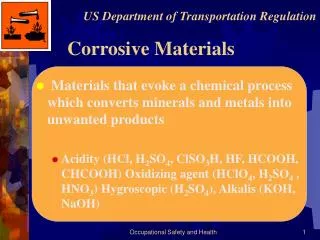
General Information • Major classes: strong acids, strong bases, dehydrating agents, oxidizing agents. • Cause skin erosion; particularly damaging to the eyes. • Inhalation can cause severe bronchial irritation. • Flush exposed skin with water for at least 15 minutes. Then seek medical treatment!
Strong Acids • ALLconcentrated acids can damage the skin and eyes and their burns are very painful. • Nitric, chromic, and hydrofluoric acids are especially damaging because of the types of burns they inflict. • Seek immediate medical treatment if you have been contaminated with these materials.
Strong Bases • Burns from these materials are often less painful than acids. • Injured person often does not take immediate action and the material is allowed to penetrate into the tissue. • Ammonia is a severe bronchial irritant and should always be used in a well-ventilated area, i.e. in a fume hood.
Special Handling Procedures • Corrosive chemicals should be used in the fume hood. • When working with large quantities of corrosives, wear gloves, face shields, lab coats, and rubber aprons.
Special Handling Procedures • Store in cabinets, under the hood or on low shelves. • Keep containers that are not in use in storage areas and off bench tops. • Use a safety carrier or cart for transport.