Download
1 / 19
190 likes | 324 Vues
The liver is the body's largest organ, playing a vital role in digestion and overall health. This lecture by Dr. Than Kyaw discusses various liver functions, both digestive and non-digestive, including detoxification, bile production, and blood clotting factor synthesis. It also explores liver conditions such as jaundice and their causes, highlighting the importance of liver enzymes in diagnosing liver health. Understanding these functions and impairments is crucial for maintaining well-being and preventing liver-related diseases.

E N D
The Liver and digestion Dr. Than Kyaw 7 May 2012
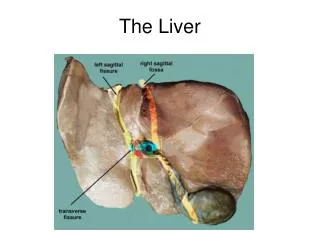
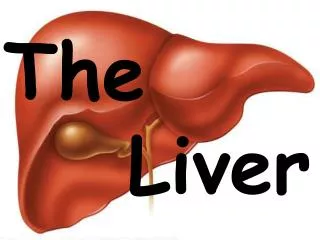
The Liver • largest organ in the body • located behind the diaphragm • divided into lobes • performs multiple complex life sustaining functions • Many functions – • related to the numerous liver enzymes • -- Some enzymes for "break down" of molecules • -- Some for "combination" of molecules forming new essential substances • for the body • -- intermediate metabolism • Produces bile
Non-digestive and Digestive Functions of the Liver
Non-digestive Functions • Detoxification • (most medicines, alcohol, harmful substances from the body) • Production of blood clotting factors • Storage of glycogen • Storage of vitamins and minerals • Destruction of old non-functional red blood cells • Removal of hormones • Removal of ammonia from the body (urea formation) • Formation of plasma proteins • (globulin and albumin -- used for the building blocks of the body and the immune system.)
Digestive Function • Bile production Bile -- synthesized in the liver; stored in the gall bladder -- released when stimulated by CCK which is secreted when chyme enters duodenum -- Bile duct joins with pancreatic duct before opening into the duodenum Bile -- contains no digestive enzyme -- contains -- bilirubin (derived from break down of hemoglobin) -- cholosterol -- bile salts -- phospholipids (lecithins)
Digestive Function • Bile production Bile salts – a range of lipids that assist in the break up of lipid droplets to smaller droplets increasing surface areas for digestion by lipase -- emulsifying action. -- also aids the absorption of fatty acids and glycerol along the small intestine NOTE: Equine digestive feature include: 1. low levels of amylase in saliva2. absenceof a gall bladder (there is a constant releaseof bile into the intestine) 3. a relatively small stomach (about 1 gallon) 4. Large caecum - about 4 gallon
Impaired Liver Function and Jauncice Jaundice or icterus - Characterized by yellowish discolouration of skin, mucous membranes, and/or sclera - Resulted from accumulation of bilirubin (bile pigment) in the blood and tissues
Jaundice or icterus Causes of jaundice - liver damage - occlusion of bile duct - increasedrate of erythrocyte destruction (hemolytic diseases, e.g: anaplasmosis – the bile pigments are liberated into the blood faster than the liver can conjugate and secrete them – icterus results Any factor that disrupts the movement of bilirubin from the blood to the liver and then out of the body -- causes jaundice
Senescent RBCs Hemolysed* RBCs In MPS cells releasing HB *What are hemolytic agents? (bacterial toxins, snake venoms, blood parasites, hypotonic solutions) Fate of Erythrocytes
Classifications of causes of jaundice Three primary types: Prehepatic Causes- Those occurring before the blood passes through the liver - Also referred to as hemolytic causes (result from a breakdown of red blood cells – parasites:anaplamosis, babesiosis). - Fatty infiltration of the liver (hepatic lipidosis) - Inflammatory diseases of the liver (hepatitis), bile duct system (cholangitis), or both (cholangiohepatitis) - Toxins (e.g, heavy metals, chemical flea and tick dips and sprays) - Certain drugs (e.g, diazepam, acetaminophen, griseofulvin) - Cancer - Infections - viral, bacterial, protozoal
Hepatic icterus Chronic hepatitis: • Hereditary hepatitis • Drug-induced chronic hepatitis (e.g.; dog - phenobarbital) Acute hepatitis: • Toxic materials • Infectious (leptospirosis, canine, infectious hepatitis, Yersinia, Salmonella) Neoplasia: • Lymphoma, hepatic metastases, etc. Acute cholangitis
Posthepatic Causes - Disorders that occur after blood passes through the liver • - Disorders or gallbladderdiseasesthat block the bile flow from the liver (gall stones, Fasciola hepatica, Ascaris, cancer, or inflammation of the gall bladder and bile duct) - Pancreatic diseases (pancreatitis and pancreatic cancer or abscess) - Intestinal diseases that block the bile ducts
Moderate yellow discoloration of the mucosal membranes (sub-icterus).
Yellow discoloration of pig viscera and carcass caused by cirrhosis of the liver.
Liver Enzymes (Human) • Automatic biochemistry analyzer: • - aspartateaminotransferase (AST or SGOT) • - alanineaminotransferase (ALT or SGPT), • ALT: < 35U/L, AST: <40U/L • Elevated ALT, AST : acute hepatitis (viral or toxic), • chronic hepatitis and cirrhosis, biliary obstruction • Alkaline phosphatase (ALP) : 30-130 U/L ( 36-92 U/L) • Elevated ALP: bile duct obstruction, primary • hepatocellular carcinoma, hepatitis
END OF LECTURE VIDEO CLIPS ONGASTRIC MOTILITY