Download
1 / 65
650 likes | 787 Vues
This comprehensive overview explores the multifaceted civilization of Ancient Egypt, examining its rich cultural heritage, social hierarchy, and innovative practices. From the annual flooding of the Nile and the importance of agriculture to the intricacies of mummification and the beliefs surrounding the afterlife, discover how ancient Egyptians lived, worked, and honored their gods. Key figures such as Menes, Ramses II, and Hatshepsut are highlighted, alongside significant monuments like the Great Pyramid of Giza and the Sphinx. Delve into the legacy of this timeless civilization.

E N D
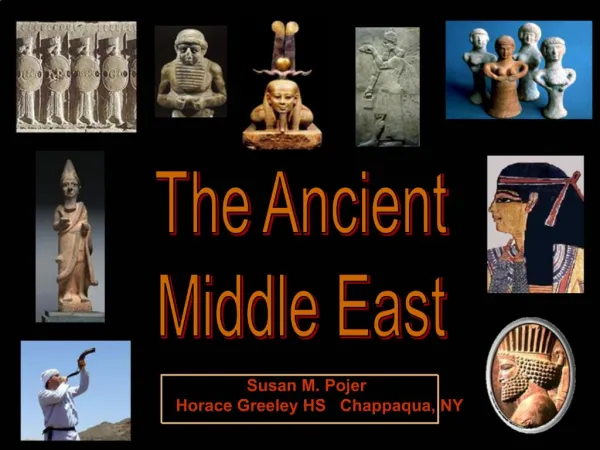
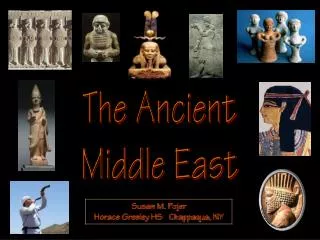
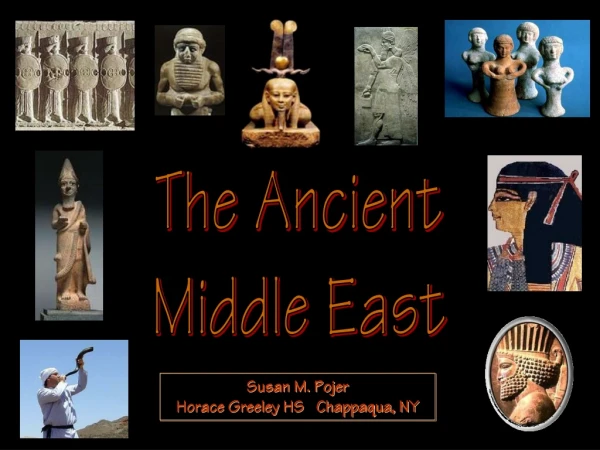
The Ancient Middle East Susan M. PojerHorace Greeley HS Chappaqua, NY Additional slides by D. Brady
Menes: Unifier of Upper & Lower Egypt c. 3050 B. C. E. ?
Ancient Egyptian Housing Middle Class Homes Peasant Homes
An Egyptian Woman’s “Must-Haves” Mirror Perfume Whigs
Papyrus Paper Hieratic Scroll Piece Papyrus Plant
Egyptian Math & Draftsmenship What number is this?
Hieroglyphics “Alphabet” 24 “letters” + 700 phonetic symbols
Egyptian Creation Myth The Goddess Nut
Egyptian Gods & Goddesses:“The Sacred ‘Trinity’” Osiris Isis Horus
Preparations for the Underworld ANUBIS weighs the dead person’s heart against a feather. Priests protected your KA, or soul-spirit
Materials Used in Mummification 1. Linen 6. Natron2. Sawdust 7. Onion3. Lichen 8. Nile Mud4. Beeswax 9. Linen Pads5. Resin 10. Frankinsense
Egyptian Mummies Ramses II1279-1212 B. C. E. Seti I1291-1278 B. C. E. Queen Tiye, wife of Amenhotep II1210-1200 B. C. E.
Journey to the Underworld The dead travel on the “Solar Bark.” A boat for the journey is provided for a dead pharaoh in his tomb.
The Final Judgement Anubis Horus Osiris
Ankhenaton: First Monotheist? 1352-1336 B. C. E.