Understanding Photosynthesis: The Process of Life Through Sunlight and Plants
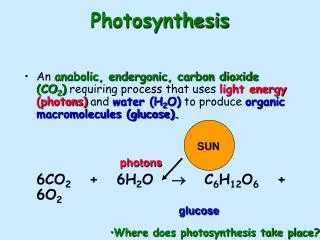
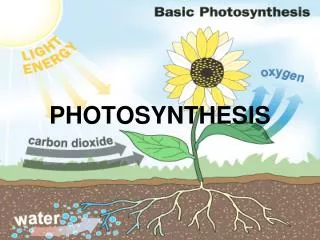
Photosynthesis is a vital process where plants convert sunlight, water, and carbon dioxide into glucose and oxygen. This scientific phenomenon illustrates the interdependence of living beings, as animals release carbon dioxide that plants absorb for photosynthesis. Key ingredients include carbon dioxide (CO2), water (H2O), and sunlight, which is captured by chlorophyll in chloroplasts. The end products, glucose and oxygen, are essential for energy and life on Earth. In summary, the process can be represented chemically as 6CO2 + 6H2O + sunlight + chlorophyll = C6H12O6 + 6O2.

Understanding Photosynthesis: The Process of Life Through Sunlight and Plants
E N D
Presentation Transcript
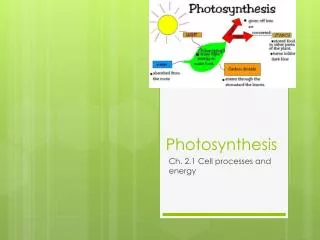
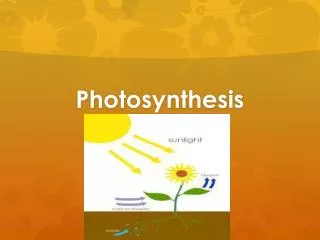
Photosynthesis Definition • Process where radiant energy (from the sun) is used to turn water and carbondioxide into glucose and oxygen. • It is one example of how people and plants are dependent on each other in sustaining life.
Carbon Dioxide Gas • Released by animals, including us, and absorbed through the stomata in the leaves. • Carbon Dioxide's formula is CO2.
Water • It is absorbed through the roots. • H2O is the formula for water.
Radiant Energy (Sunlight) • Radiant energy is the main part of the process. • Sunlight is absorbed through the leaves when it is trapped by the chlorophyll in the chloroplasts. • Without sunlight, the plants would not give off oxygen or have energy.
Chlorophyll • Chlorophyll is the chemical in chloroplasts and gives plants their green color. • Chloroplasts are the cell bodies, or organelles, inside plant’s leaves.
Glucose • Glucose is made by photosynthesis, and it provides the plant it’s own food. • As the plant grows, it breaks down stored glucose to release the energy.
Oxygen • Oxygen is a by-product that plants release during photosynthesis which provides a vital need of animals.
Scientists show this as a chemical reaction: Carbon Dioxide + Water + Sunlight and Chlorophyll = Glucose and Oxygen6CO2 + H2O + Sunlight and Chlorophyll = C6H12O6 + 6O2