Bog Turtle
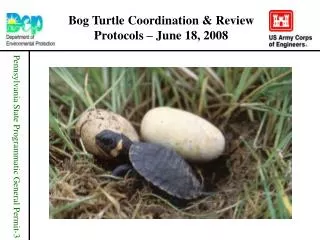
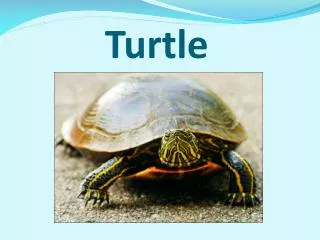
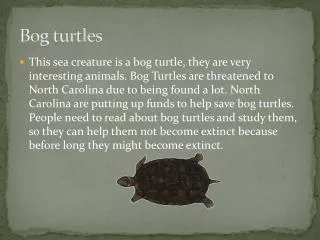
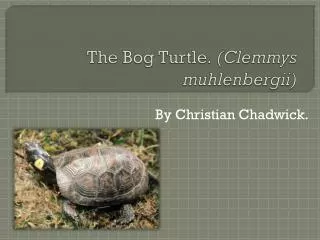
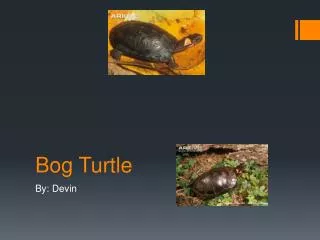
The Bog Turtle, one of the smallest turtle species, inhabits the bogs, marshlands, and swamps of the Eastern U.S. It features a dark shell with striking red or orange markings, measuring 3 to 4.5 inches in size and weighing only 4 ounces. This species feeds on plants, slugs, snails, and more. With an estimated population of only 2,500 to 10,000, the Bog Turtle is endangered due to habitat degradation and the pet trade. Conservation efforts are critical for preserving their fragile ecosystem and ensuring their survival for future generations.

Bog Turtle
E N D
Presentation Transcript
Bog Turtle By: Devin
Biome, Ecosystem, And Habitat • The Bog Turtle’s Biome, Ecosystem, or Habitat is Eastern U.S. • They live in bogs, marshlands, and swamps.
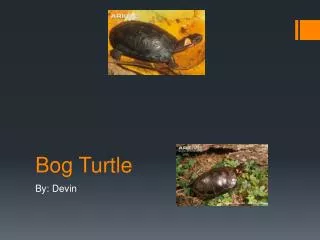
Description • Color- The color of the bog turtle is dark brown or black shell, dark brown head, neck, and limbs, large red or orange band, and yellow or orange blotch • Weight- The weight of the bog turtle is 4 ounces • Size- Bog Turtles are among the world’s smallest turtle species. Adult carapaces measure 3 to 4.5 inches.
Food • Some of the plants that the bog turtles eat are seeds, berries, and green vegetation. • Some animals or insects that the bog turtle’s eat are slugs, snails, crayfish, and worms.
Young (offspring) • Bog turtle’s mate in spring and nest in summer, with females typically laying a clutch of one to six eggs a year. • Hatchlings grow quickly but may not reach sexual maturity until they are 10 years old. • Beyond nesting, there is no parental care.
Predators • Bog Turtles have many natural predators, but the biggest threat to their survival is the fragile nature of their vanishing ecosystem. • Populations have also been negatively affected by the pet trade, although the species is now legally protected.
Remaining Population • The estimated population of the bog turtle is 2,500 to 10,000.
Reasons It Is Endangered • In addition to bog turtles needing a very specific habitat, much of the remaining habitat is in the Northeast.
Conservation Measures • Plants such as loosestrife and reed can quickly invade the bog turtles habitat resulting in the loss of basking and nesting areas. • Contamination by pesticides, agricultural run-off, and industrial waste also affect the bog turtle’s habitat in a negative way.
Interesting Facts • Live in Georgia’s rarest ecosystems • Hibernate in winter, often using the same mud burrows year after year • They defend their territory
Works Cited • ZOO ATLANTA. BOG TURTLE. INTERNET. www.zooatlanta.org 10-14-12 • DEPARTMENT OF ENVIRONMENTAL CONSERVATION.BOG TURTLE FACT SHEET. INTERNET. www. dec.ny. gov/animals 17164.html 10-14-12 • “BOG TURTLE”. INTERNET. www. Rosamondgiffordzoo.org 10-14-12 • Karma Williams. “Bog Turtles-Could These Small Turtles Be Hiding in a Wetland Near You”. Ezinearticles.com 10-23-12 • Eco Watch. Internet. Ecowatch.org 10-24-12