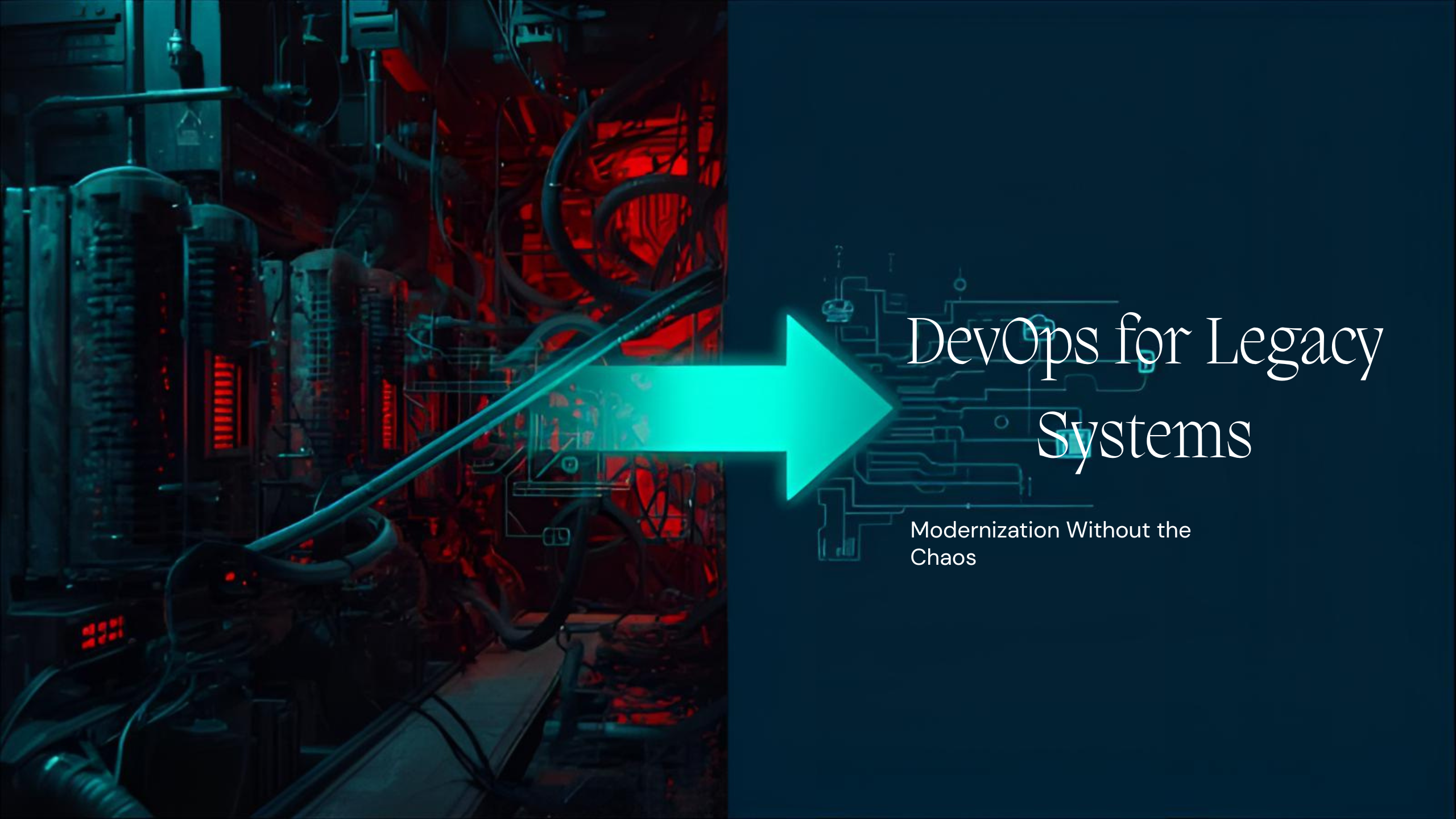
Modernizing legacy systems is one of the biggest challenges enterprises face today. Your mainframe has been running since the late 1990s. Your COBOL developers are retiring faster than you can replace them. And worst of all, 60-80% of your IT budget goes toward maintenance instead of innovation.
But here's the good news: you don't need to bet your company on a risky rewrite. You don't need months of downtime. What you need is a strategic approach that replaces your legacy infrastructure incrementally while keeping your business running.
This is where DevOps consulting services come in ,helping enterprises navigate this complex transformation with confidence.
The Strangler Fig Pattern: Replace, Don't Rewrite
The Strangler Fig Pattern is the safest way to modernize legacy systems. Instead of replacing everything at once, you build new services alongside old ones and gradually shift traffic over time.
Here's how it works:
- Phase 1: Create an integration façade (API gateway or message broker) that sits between your legacy system and new services
- Phase 2: Build your first modern microservice in parallel with the legacy equivalent
- Phase 3: Route a small percentage of traffic to the new service (5-10%) while monitoring performance
- Phase 4: Gradually increase traffic as confidence grows (25% → 50% → 100%)
- Phase 5: Once stable, decommission the legacy component
CI/CD for Legacy Systems: Automation Without Chaos
Your mainframe can have modern CI/CD pipelines. Yes, really. You don't need to move everything to the cloud first.
A proper DevOps approach automates legacy deployments using:
- Git as your source control (not proprietary mainframe libraries)
- Jenkins or Azure Pipelines to detect code changes automatically
- SonarQube for automated code quality scanning before human review
- Unit tests using frameworks like xUnit (yes, COBOL supports testing)
- Artifact repositories for version control and deployment packages
Hybrid Infrastructure: On-Premise + Cloud United
You don't have to choose between on-premise and cloud. Leading enterprises run both simultaneously using unified DevOps practices.
A solid hybrid infrastructure requires:
- Centralized monitoring – One dashboard for all systems (on-premise and cloud)
- Infrastructure as Code – Terraform provisions both on-premise and cloud resources
- Unified identity – SSO across all environments using Azure AD or Okta
- Dedicated network links – Direct connections (AWS Direct Connect, Azure ExpressRoute) for security and speed
The Realistic 5-Phase Timeline
Enterprise modernization isn't quick. But it's predictable when you follow a proven roadmap.
Months 0-3: Foundation & Assessment
- Map dependencies, identify integration points
- Create your integration gateway
- Modernize and validate your first component
- Multiple slices migrate in parallel
- 50-70% of workloads modernized, legacy archived
Real Results
Organizations using strategic DevOps practices reports:
- 4x faster deployments – From quarterly to weekly or daily
- 0% planned downtime – Business operations never stop
- 40% performance improvement – Modern systems are more efficient
- 50-70% workload migration – Significant transformation in three years
Your Next Step
Modernizing legacy systems requires more than tools. It requires strategy, expertise, and patience. Whether you need help with the Strangler Fig Pattern, CI/CD automation, or hybrid infrastructure, professional DevOps experts can guide your team through this transformation safely.
Your legacy systems don't have to be dead weight. They can become the foundation of modern, scalable infrastructure one phase at a time.
The question isn't "Can we modernize?" It's "When do we start?"