Download
1 / 31
310 likes | 458 Vues
The Berlin Wall stands as a powerful symbol of the Cold War, dividing East and West Berlin from 1961 until its fall in 1989. After WWII, Germany was split into four sectors, leading to varying governance' between the Allies and the USSR. The wall not only split families and friends but also represented the stark contrast in political ideologies. Significant events like the Berlin Airlift showcased Allied support for West Berlin. The reunification of Germany in 1989 marked the end of communism’s grip in Eastern Europe and ushered in a new era of unity and progress.

E N D
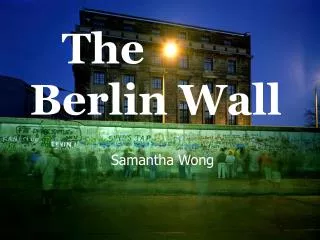
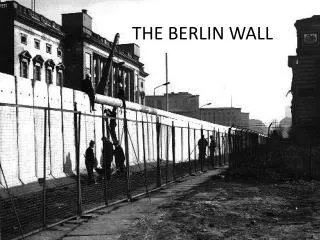
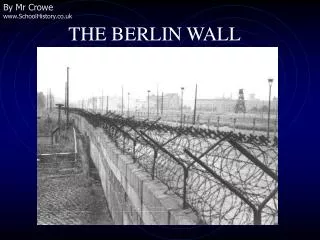
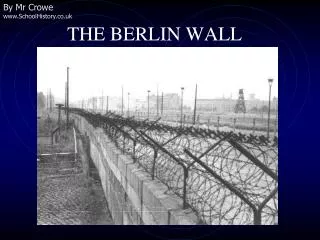
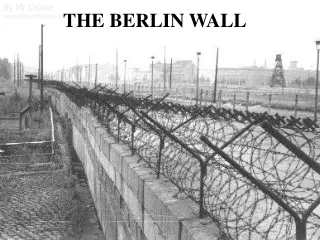
The Berlin Wall Behind a Curtain of Concrete
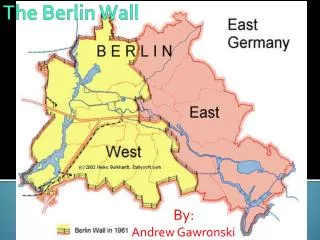
Cold War • After WWII, Allies split Germany into 4 sectors • France, US, and UK administered their sectors jointly • USSR forced Communism on the people of their sector
DIVIDES EAST FROM WEST • The wall divided families, businesses, and friends • No Germans were allowed to cross between sectors in the early days • Only US, UK, French, and USSR citizens could travel, and that was restricted
THE BERLIN AIRLIFT • USSR closed supply lines to West Berlin • In response, the Allies used airplanes to drop food and other goods to the West Berliners • A few American pilots began to drop packets of candy for the children of Berlin
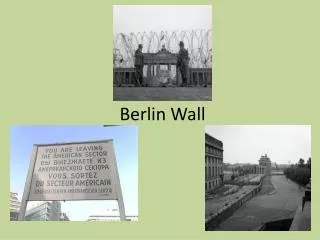
A symbol of unity, shadowed by separation, the Brandenburg Gate.
A decade later, looking from West to East Berlin through the Brandenburg gate.
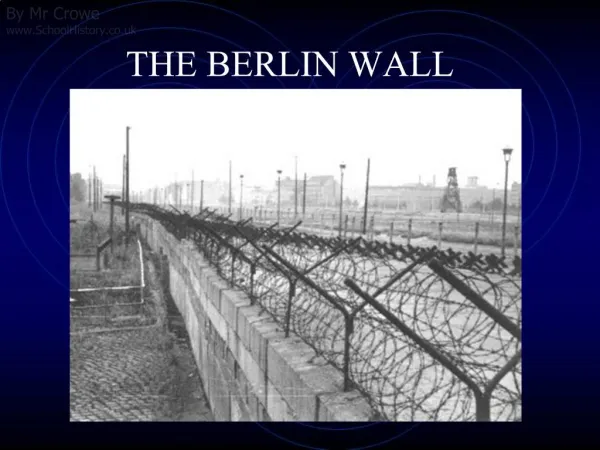
STATS AND FIGURES • 66 miles long; 11.81 feet high. Total border is 96 miles long. • 302 Total Watch Towers • 239 people killed ON the wall • Over 500 injured by shooting • 3200 arrested attempting to escape • Dozens of East German guards escaped at first, until finally Russians were made guards
Checkpoint Charlie • 1 of 3 Checkpoints between the allied sectors and USSR sector (Alpha, Bravo, and Charlie). • Actually a major street, it’s real name is Friedrichstrasse (or Frederick Street). • Checkpoint Charlie became the symbol of the tensions between East and West during the Cold War
Checkpoint Charlie, 1974 • Tensions rose amongst the former allies • Cold War was heating up • It appeared as if Germany would never reunite.
A RAY OF HOPE Ronald Reagan And Mikhail Gorbachev
DISAGREEMENT • Ronnie and Gorby argued • BUT…they knew they had to strike a deal • So…
THEY WORKED • Gorbachev’s openness (glasnost) led to reforms in USSR • US/USSR relations began to improve
PEACEFUL PROTESTS Protests begin throughout the Soviet Bloc; including Leipzig and East Berlin. These peaceful protests became known as “Die Wende,” the wind, that swept away the Communist threat.
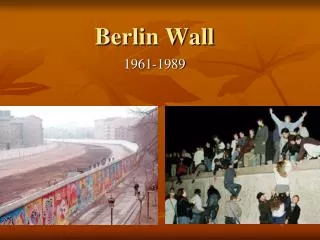
11+5=1 • The East and West Berliners celebrate • Communism loses its hold on people throughout Europe • Families, cultures, businesses, and a people are reunited
Reunification! Since Reunification, Germany has worked its way back to become the 3rd largest world economy, and a leader in the European Union.
Though their goal was accomplished, the world still must press on…notice the background.
Created by Brock A. BeaverWestview Middle SchoolDecember, 2003