
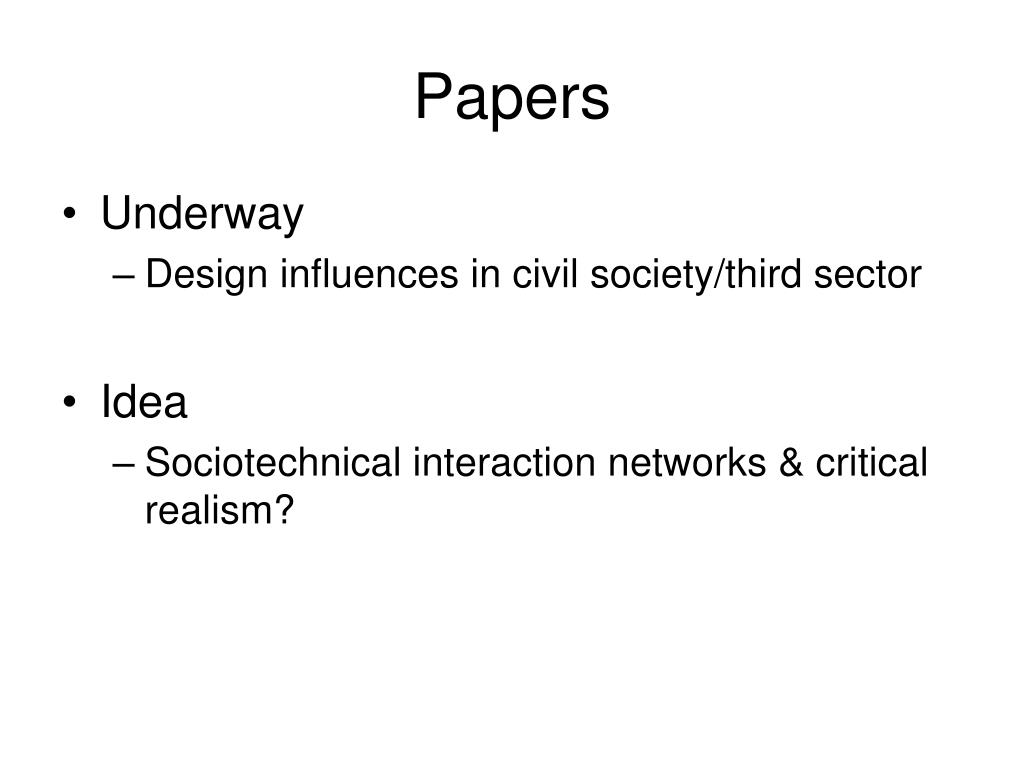
Papers

This paper examines the role of sociotechnical interaction networks and critical realism in informing boundaries within the third sector. It discusses the ‘Boundaries Project’, which integrates Web 2.0 tools and boundary pedagogy in informal adult education, funded by the Leonardo da Vinci program. The article also reviews evaluations of European Trade Union E-learning projects in the context of TUC Education. Additionally, it highlights initiatives like the MK Living Lab and digital corridors in South Yorkshire and Manchester, underscoring the importance of patience in addressing community needs.
Télécharger la présentation 
Politique de téléchargement : le contenu du site vous est fourni TEL QUEL pour votre information et votre usage personnel ; il ne peut être vendu, concédé sous licence ni partagé sur d’autres sites sans l’accord de son auteur.Le contenu vous est fourni TEL QUEL, pour votre information et votre usage personnel uniquement. Téléchargez la présentation en cliquant sur ce lien. Lors du téléchargement, si vous ne parvenez pas à télécharger une présentation, l’éditeur a peut-être supprimé le fichier de son serveur.Pendant le téléchargement, si vous ne parvenez pas à obtenir une présentation, le fichier a peut-être été supprimé par l’éditeur.
F I N