SlideServe
Menu
Préférences
© SlideServe · v2026

Why Care About Animal Use and Care?

huyen avatar
13 diapositives · 449 Views · Sep 17, 2014

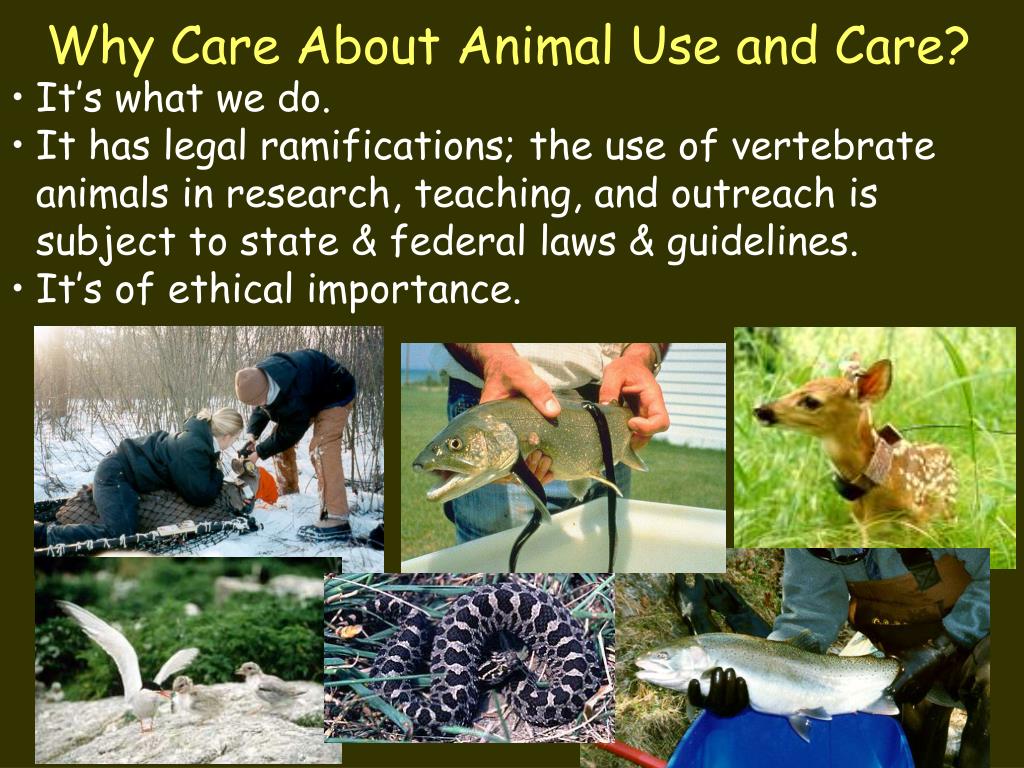
Why Care About Animal Use and Care?. It’s what we do. It has legal ramifications; the use of vertebrate animals in research, teaching, and outreach is subject to state & federal laws & guidelines. It’s of ethical importance. IACUC. Institutional Animal Use and Care Committee.
Why Care About Animal Use and Care? - slide 1
01 / 13Why Care About Animal Use and Care?
1 / 17

Télécharger la présentation

Why Care About Animal Use and Care?
Une image / un lien ci-dessous est fourni (tel quel) pour télécharger la présentation

Politique de téléchargement : le contenu du site vous est fourni TEL QUEL pour votre information et votre usage personnel ; il ne peut être vendu, concédé sous licence ni partagé sur d’autres sites sans l’accord de son auteur.Le contenu vous est fourni TEL QUEL, pour votre information et votre usage personnel uniquement. Téléchargez la présentation en cliquant sur ce lien. Lors du téléchargement, si vous ne parvenez pas à télécharger une présentation, l’éditeur a peut-être supprimé le fichier de son serveur.Pendant le téléchargement, si vous ne parvenez pas à obtenir une présentation, le fichier a peut-être été supprimé par l’éditeur.

F I N

Plus de contenu associé

Transcription de la présentation
  1. Why Care About Animal Use and Care? • It’s what we do. • It has legal ramifications; the use of vertebrate animals in research, teaching, and outreach is subject to state & federal laws & guidelines. • It’s of ethical importance.

  2. IACUC Institutional Animal Use and Care Committee http://www.aucauc.msu.edu/ • Reviews all animal use forms (AUFs) • Develops policies and guidelines for ethical treatment of animals in T,R, and O • Inspects animal research labs • Coordinates with federal inspectors • Helps MSU vertebrate animal researchers

  3. What do you need to do if you’ll be working with vertebrate animals? • Complete On-Line Training and Questionnaires http://www.iacuc.msu.edu/training/training_index.htm • General IACUC training • Species Specific training • ORCBS http://www.orcbs.msu.edu/ • Other (surgery, etc) • Medical evaluation by university physician OHSP http://www.iacuc.msu.edu/ohs/ohs_index.htm • Submit (and revise) appropriate AUF

  4. How many AUFs are there? • http://www.iacuc.msu.edu/forms/forms_index.htm • Standard AUF • Amendment to existing AUF • Exemption • Outreach YOUR AUF MUST BE COMPLETED AND APPROVED BEFORE YOU BEGIN WORKING ON A PROJECT!

  5. AUF Highlights Upcoming deadlines: Oct 2 for Nov 6 mtg Nov 6 for Dec 4 mtg IACUC meets 1st Thursday of each month

  6. AUF Highlights: USDA Categories

  7. AUF Highlights: Numbers of Animals

  8. AUF Highlights: Permits and Precautions

  9. AUF Exemptions Check with your advisor and IACUC • Projects with current IACUC approval at another institution • Projects where wild vertebrates are observed undisturbed in natural habitat • Projects involving retrieval of data from paper or electronic records • Projects using tissues leftover from IACUC approved projects • Diagnosis and treatment of a client owned animal with procedures performed for the benefit of that animal.

  10. Amendments • Any changes in animal number or personnel, or procedural modifications require an amendment prior to initiating the changes • Modifications include change of drugs, change in euthanasia method, change in currently approved methods, change in species • The amendment is reviewed and approved in the same manner as an AUF

  11. Outreach Activities

  12. Remaining Tidbits • Help is available • Attending Veterinarian: Dr. Robert Werner • IACUC personnel and committee members • SOPs may be available for reference • Euthanasia and anesthesia guidelines are available for many taxa on IACUC website • If individuals or groups attempt to FOIA you, please contact IACUC. They will coordinate. • You, or others, can report concerns re animal treatment. Policy on the Procedure for Reporting Concerns in Animal Care and Treatment

  13. Guiding Principles • Avoid unintended or unnecessary duplication of research using live vertebrate animals • Assure that necessary animal use is done in the most humane way possible