Animal Adaptations
This article explores the fascinating ways animals adapt to their environments to survive. It covers various adaptations including specialized body parts like whiskers, which help cats navigate tight spaces, and large beaks, such as that of the giant squid, which can break objects. It also discusses body coverings like scales in snakes that offer protection and the camouflage provided by striped fur in zebras. Additionally, it highlights behavioral adaptations, such as the defensive spray of skunks and the vocal signals of hungry baby birds.

Animal Adaptations
E N D
Presentation Transcript
Animal Adaptations By: Sean Adaptation helps an animal survive in its environment.
Body Parts Body parts help animals in many ways. Whiskers: Cats have whiskers to help them know if they can fit through tight spots. Large Beaks: the giant squid has a beak that is strong enough to break an oar.
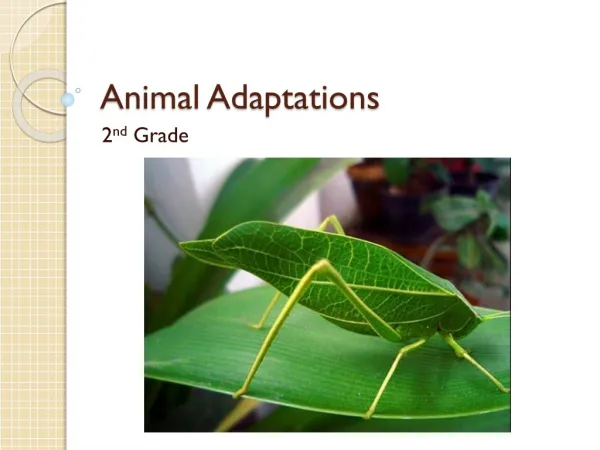
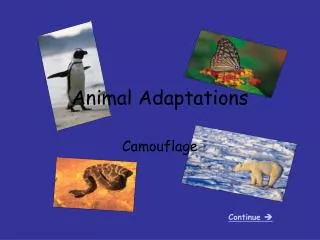
Body Coverings Body coverings help protect the animal in different environments. Scales: Snakes have scales to protect their bodies. Striped Fur: A zebras striped fur helps it camouflage in the plains
Behavior Animals adapt to their environment by their behavior. Skunk: The skunk sprays smelly stuff at Its enemies. Baby birds: They squeel when they are hungry.