Analyzing Decision Making and Advertising Effectiveness for Levi Strauss & Co.
This agenda explores critical decision-making processes and advertising effectiveness, focusing on the art of persuasion for Levi Strauss & Co. (LS&CO.), a leading apparel company experiencing a seventh consecutive year of sales decline. The discussion will cover the information processing model, emotional and cognitive influences on consumer behavior, and practical research strategies. Key resources available for background research will also be highlighted by Mr. Chuck Popovich. Strengthening brand recognition amidst declining sales is vital for LS&CO.'s future success.


Analyzing Decision Making and Advertising Effectiveness for Levi Strauss & Co.
E N D
Presentation Transcript
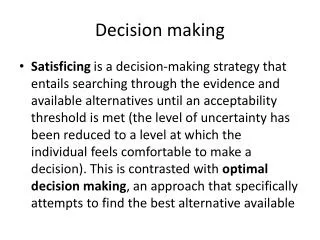
Decision Making MKT 846 Professor West
Agenda • Looking back… • What clues can our “information processing model” provide? • Evaluating Ad Effectiveness • The Art of Persuasion • What should Levi Strauss & Co. be doing? • Relating attitudes to choice • The role of cognition, emotions, and involvement • Doing background research for your project • Mr. Chuck Popovich will demonstrate resources available on-line and in the library
Purchase Retention Acceptance/ Yielding Attention Comprehension Exposure Delayed Recall Scanner Data Attitude, Purchase Intent Listener Recognition Recall, Checklists Circulation, Reach Measuring Advertising Effectiveness • McGuire Model Testing Ad Effectiveness
Tactical Decisions Yielding Attention Comprehension Exposure Retention
Tactical Decisions Yielding Attention Comprehension Exposure Retention
The Art of Persuasion • Hierarchy of Effects Models:
The Case of Levi Strauss & Co. • Founded in 1853, Levi Strauss & Co. (LS&CO.) is one of the world's largest brand-name apparel companies with sales in more than 100 countries. • Seventh consecutive year of sales decline • After peaking at $7.1 billion in 1996, Levi's sales have slipped every year, and the company has warned that it expects 2003 revenue to come in at 6 to 7 percent below the prior-year level. Fiscal 2002 sales were $4.14 billion. • Levi's remains one of the best-known trademarks in U.S.
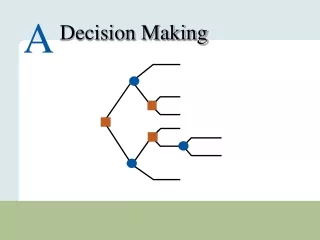
Decision Making Problem/Opportunity Recognition • Traditional Model: Information Search Alternative Evaluation Purchase Decision Post Purchase Evaluation
Four Paths … • Cognitive processing: • Think Feel Do • Experiential processing: Emotional • Feel Do Think Impulse • Do Feel Think • Habitual processing: • Do Think Feel
Next Time… • Duncan Chapter 6 • Purvis pp 1 – 18 • Once your team has received a “go ahead” on your proposal it is time to do background research and write-up a situation analysis that incorporates: • Industry information, Company and Competitor information, Consumer information, and Environmental Factors & Trends