Understanding Typhus: Causes, Symptoms, Treatment, and Prevention
Typhus is a serious infection caused by Rickettsia bacteria, primarily Rickettsia prowazekii for epidemic typhus and Rickettsia typhi for endemic typhus. Symptoms include chills, high fever, severe headache, joint pain, and a distinctive rash that starts on the chest and spreads to limbs. Transmission occurs through lice or fleas. Diagnosis relies on clinical findings and antibody tests, while treatment typically involves antibiotics like doxycycline. Effective prevention strategies include good hygiene and avoiding exposure to vectors. Prompt treatment leads to improved recovery rates.

Understanding Typhus: Causes, Symptoms, Treatment, and Prevention
E N D
Presentation Transcript
What is Typhus? • Chills • Cough • High Fever • Joint Pain • Low BP • Severe Headache/Muscle Pain • Stupor • Delirium • Rash that begins on chest and spreads to limbs (but not palms of hands or soles of feet)
What causesTyphus? • Rickettsiaprowazekii: epidemic typhus • Rickettsiatyphi : endemic (murine) typhus • Gram (-), non-motile, obligate intracellular parasite, aerobic bacteria
Fun Fact: Rickettsiaprowazekii and the origin of mitochondria • Andersson et al (1998) • Similar functional profile of genome to mitochondria • Similar ATP production mechs • Possible insight into endosymbiosis
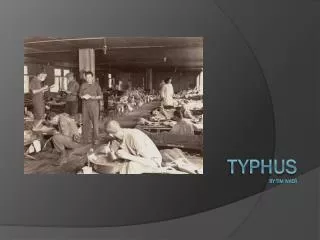
History of Typhus • Commonly found in prisons/crowded areas • Lends to its common name of “Jail Fever”
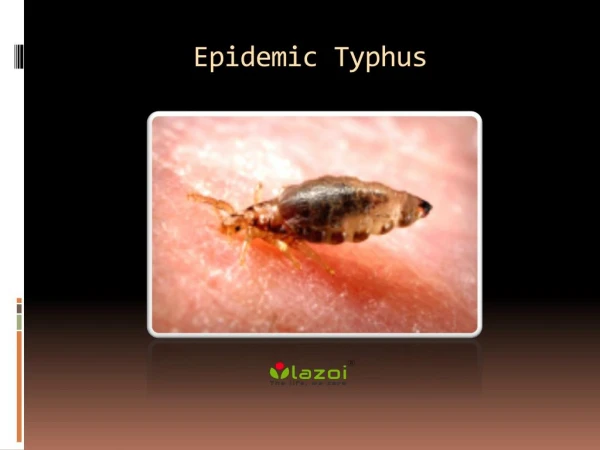
How Does Typhus Spread? • Two modes of transmission: • Epidemic typhus – Lice to humans • Endemic typhus – Fleas to humans
Rickettsia-Host Cell Interaction • Entry: • Interaction with Outer Membrane Protiens • Phagocytosis
Escape from Phagosome and Spread to Other Cells • Lysing of Phagosomal Membrane • Divide by Binary Fission • Spread due to burst of cell • Lack Actin-Polymerization machinery
Diagnosis • Should be made based on clinical findings • Complete blood count to check for anemia/low platelets • Test for increased levels of typhus antibodies
Treatment • Easily treated with a mix of broad-spectrum antibiotics • Most common include doxycycline, tetracycline and chloramphenicol. • Originally, vaccine dangerous to produce, now just not worth it
Prognosis • Infrequent relapses • Without treatment, death resulted in 10-60% of cases for epidemic typhus • <2% for endemic typhus • Prompt treatment leads to prompt recovery
Prevention • Good Hygiene • Avoid areas where one may encounter rats/fleas and lice. • Bathe regularly • Use insecticides • Wash clothes regularly
References • Anderson et al. “The genome sequence of Rickettsiaprowazekii and the origin of mitochondria”. Nature 396. (1998) pg 133-140. • Immunopaedia.org, 2010. Web. 4 April 2012. http://www.immunopaedia.org.za/index.php?id=257 • Mayer, Gene. Microbiology and Immunology. Columbia, SC: The Board of Trustees of the University of South Carolina, 2010. • Parola, Philippe and Didier Raoult. Rickketsial Diseases. Informa Healthcare, 2007. • “Rickketsia”. Wikipedia, The Free Encyclopedia. Wikimedia Foundation Inc. 21 Feb 2012. Web. 4 April 2012. • “Typhus”. Wikipedia, The Free Encyclopedia. Wikimedia Foundation, Inc. 30 March 2012. Web. 4 April 2012.