Download
1 / 7
70 likes | 201 Vues
Elements and Atoms (pg. 27-29). By Megan Blosser Dominique Johnson and Shannon Painter. Elements. A unique substances that can not be broken down into other simpler substances by ordinary chemical methods Examples: oxygen, carbon, gold, iron 112 known elements (113 to 116 are alleged)

E N D
Elements and Atoms (pg. 27-29) By Megan Blosser Dominique Johnson and Shannon Painter
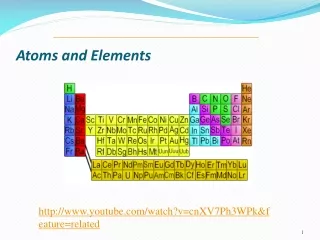
Elements • A unique substances that can not be broken down into other simpler substances by ordinary chemical methods • Examples: oxygen, carbon, gold, iron • 112 known elements (113 to 116 are alleged) • 92 of them occur naturally while the rest are produced artificially
Atoms • The smallest particle that still retains its special properties • The basic building blocks of matter • The weird atom has Greek origins and means, incapable of being divided
Atoms • Atoms are indescribably small • Are made of subatomic particles • Under special circumstances can be split into smaller particles • When split into smaller particles the elements loose their special properties • Man used the atom to create atomic bombs and harness the power of electricity through nuclear power
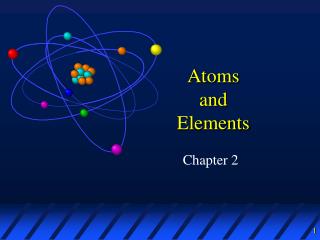
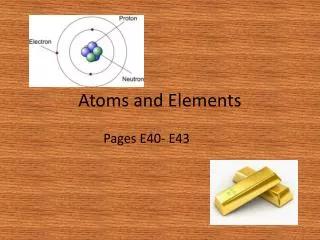
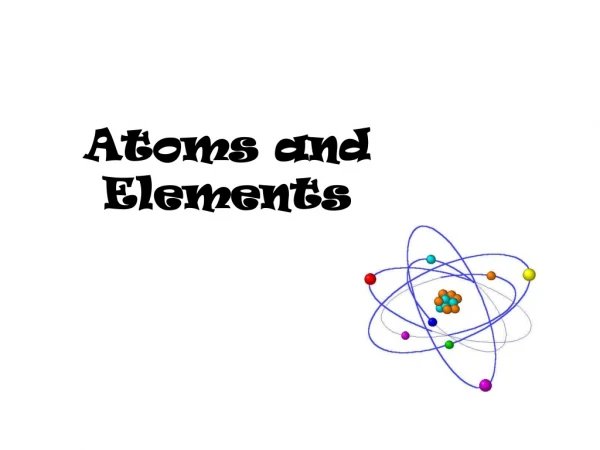
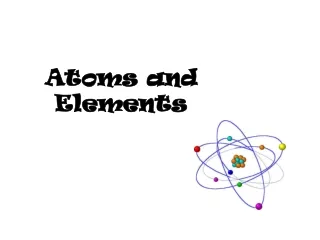
Atoms • The atom consists of electrons, neutrons, and protons
Works Cited • http://www.howstuffworks.com/atom.htm • http://education.jlab.org/atomtour/ • http://www.webelements.com/biology.html