Network Security
This overview of network security delves into essential concepts, addressing questions such as "What is security?" and "Who is vulnerable?" We explore common attacks, including denial of service and packet sniffing, alongside preventive measures like firewalls and intrusion detection systems. Drawing insights from Sun Tzu's "The Art of War," we emphasize the importance of readiness and proactive security. This guide outlines security definitions, categories, and the critical need for safeguarding our digital assets in an increasingly interconnected world.

Network Security
E N D
Presentation Transcript
The art of war teaches us to rely not on the likelihood of the enemy's not coming, but on our own readiness to receive him; not on the chance of his not attacking, but rather on the fact that we have made our position unassailable. —The Art of War, Sun Tzu
Overview • What is security? • Why do we need security? • Who is vulnerable? • Common security attacks and countermeasures • Firewalls & Intrusion Detection Systems • Denial of Service Attacks • TCP Attacks • Packet Sniffing • Social Problems
What is “Security” • Dictionary.com says: • 1. Freedom from risk or danger; safety. • 2. Freedom from doubt, anxiety, or fear; confidence. • 3. Something that gives or assures safety, as: • 1. A group or department of private guards: Call building security if a visitor acts suspicious. • 2. Measures adopted by a government to prevent espionage, sabotage, or attack. • 3. Measures adopted, as by a business or homeowner, to prevent a crime such as burglary or assault: Security was lax at the firm's smaller plant. …etc.
What is “Security” • Dictionary.com says: • 1. Freedom from risk or danger; safety. • 2. Freedom from doubt, anxiety, or fear; confidence. • 3. Something that gives or assures safety, as: • 1. A group or department of private guards: Call building security if a visitor acts suspicious. • 2. Measures adopted by a government to prevent espionage, sabotage, or attack. • 3. Measures adopted, as by a business or homeowner, to prevent a crime such as burglary or assault: Security was lax at the firm's smaller plant. …etc.
What is “Security” • Dictionary.com says: • 1. Freedom from risk or danger; safety. • 2. Freedom from doubt, anxiety, or fear; confidence. • 3. Something that gives or assures safety, as: • 1. A group or department of private guards: Call building security if a visitor acts suspicious. • 2. Measures adopted by a government to prevent espionage, sabotage, or attack. • 3. Measures adopted, as by a business or homeowner, to prevent a crime such as burglary or assault: Security was lax at the firm's smaller plant. …etc.
What is “Security” • Dictionary.com says: • 1. Freedom from risk or danger; safety. • 2. Freedom from doubt, anxiety, or fear; confidence. • 3. Something that gives or assures safety, as: • 1. A group or department of private guards: Call building security if a visitor acts suspicious. • 2. Measures adopted by a government to prevent espionage, sabotage, or attack. • 3. Measures adopted, as by a business or homeowner, to prevent a crime such as burglary or assault.
Why do we need security? • Protect vital information while still allowing access to those who need it • Trade secrets, medical records, etc. • Provide authentication and access control for resources • Guarantee availability of resources
Who is vulnerable? • Financial institutions and banks • Internet service providers • Pharmaceutical companies • Government and defense agencies • Contractors to various government agencies • Multinational corporations • ANYONE ON THE NETWORK
Common security attacks and their countermeasures • Finding a way into the network • Firewalls • Exploiting software bugs, buffer overflows • Intrusion Detection Systems • Denial of Service • Ingress filtering • Packet sniffing • Encryption (SSH, SSL, HTTPS) • Social problems • Education
Security Categories • Computer Security - generic name for the collection of tools designed to protect data and to thwart hackers • Network Security - measures to protect data during their transmission • Internet Security - measures to protect data during their transmission over a collection of interconnected networks
Aspects of Security • consider 3 aspects of information security: • security attack • security mechanisms • security services
Generic types of attacks PASSIVE
Firewalls • A firewall is like a castle with a drawbridge • Only one point of access into the network • This can be good or bad • Can be hardware or software • Ex. Some routers come with firewall functionality • ipfw, ipchains, pf on Unix systems, Windows XP and Mac OS X have built in firewalls
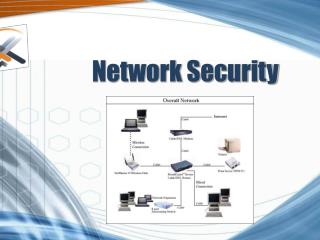
Internet Web server, email server, web proxy, etc Firewall Firewall Intranet Firewalls
Firewalls • Used to filter packets based on a combination of features • These are called packet filtering firewalls • There are other types too, but they will not be discussed • Ex. Drop packets with destination port of 23.
Firewalls • Here is what a computer with a default Windows XP install looks like: • 135/tcp open loc-srv • 139/tcp open netbios-ssn • 445/tcp open microsoft-ds • 1025/tcp open NFS-or-IIS • 3389/tcp open ms-term-serv • 5000/tcp open UPnP • Might need some of these services, or might not be able to control all the machines on the network
Firewalls • What does a firewall rule look like? • Depends on the firewall used • Example: ipfw • /sbin/ipfw add deny tcp from cracker.evil.org to wolf.tambov.su telnet • Other examples: WinXP & Mac OS X have built in and third party firewalls • Different graphical user interfaces • Varying amounts of complexity and power
Intrusion Detection • Used to monitor for “suspicious activity” on a network • Can protect against known software exploits, like buffer overflows • Open Source IDS: Snort, www.snort.org
Intrusion Detection • Uses “intrusion signatures” • Well known patterns of behavior • Ping sweeps, port scanning, web server indexing, OS fingerprinting, DoS attempts, etc. • Example • IRIX vulnerability in webdist.cgi • Can make a rule to drop packets containing the line • “/cgi-bin/webdist.cgi?distloc=?;cat%20/etc/passwd” • However, IDS is only useful if contingency plans are in place to curb attacks as they are occurring
Denial of Service Purpose: Make a network service unusable, usually by overloading the server or network
Denial of Service • SMURF • Source IP address of a broadcast ping is forged • Large number of machines respond back to victim, overloading it.
TCP Attacks • If an attacker learns the associated TCP state for the connection, then the connection can be hijacked! • Attacker can insert malicious data into the TCP stream, and the recipient will believe it came from the original source • Ex. Instead of downloading and running new program, you download a virus and execute it
TCP Attacks • Say hello to Alice, Bob and Mr. Big Ears
TCP Attacks • Alice and Bob have an established TCP connection
TCP Attacks • Mr. Big Ears lies on the path between Alice and Bob on the network • He can intercept all of their packets
TCP Attacks • First, Mr. Big Ears must drop all of Alice’s packets since they must not be delivered to Bob (why?) Packets The Void
TCP Attacks • Then, Mr. Big Ears sends his malicious packet with the next ISN (sniffed from the network) ISN=Alice
TCP Attacks • Why are these types of TCP attacks so dangerous? Web server Trusting web client Malicious user
TCP Attacks • How do we prevent this? • IPSec • Provides source authentication, so Mr. Big Ears cannot pretend to be Alice • Encrypts data before transport, so Mr. Big Ears cannot talk to Bob without knowing what the session key is.
Social Problems • People can be just as dangerous as unprotected computer systems • People can be lied to, manipulated, bribed, threatened, harmed, tortured, etc. to give up valuable information • Most humans will breakdown once they are at the “harmed” stage, unless they have been specially trained • Think government here…
Social Problems • Fun Example 1: • “Hi, I’m your AT&T rep, I’m stuck on a pole. I need you to punch a bunch of buttons for me”
Social Problems • Fun Example 2: • Someone calls you in the middle of the night • “Have you been calling Egypt for the last six hours?” • “No” • “Well, we have a call that’s actually active right now, it’s on your calling card and it’s to Egypt and as a matter of fact, you’ve got about $2000 worth of charges on your card and … read off your AT&T card number and PIN and then I’ll get rid of the charge for you”
Social Problems • There aren’t always solutions to all of these problems • Humans will continue to be tricked into giving out information they shouldn’t • Educating them may help a little here, but, depending on how bad you want the information, there are a lot of bad things you can do to get it • So, the best that can be done is to implement a wide variety of solutions and more closely monitor who has access to what network resources and information • But, this solution is still not perfect
Conclusions • The Internet works only because we implicitly trust one another • It is very easy to exploit this trust • The same holds true for software • It is important to stay on top of the latest security advisories to know how to patch any security holes