Designing Sustainable Neighborhoods: Integrating Water, Space, and Scalable Communities
This project explores innovative design principles for neighborhoods that emphasize diversity in scales and densities, focusing on both the environmental and social aspects of community living. The approach incorporates a 'moment of pause' to foster learning and anchor activities that reconnect residents with water while integrating adaptable physical spaces. Key elements include mixed-use developments, enhanced pedestrian pathways like the Riverwalk, and energy-efficient strategies that discourage car use. The aim is to create complete neighborhoods that harmonize lifestyle, work, and environmental interaction.

Designing Sustainable Neighborhoods: Integrating Water, Space, and Scalable Communities
E N D
Presentation Transcript
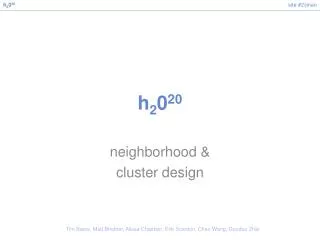
h2020 neighborhood & cluster design Tim Bates, Matt Bindner, Alissa Chastain, Erik Scanlon, Chao Wang, DuoduoZhai
design principles diversity of scales + densities hierarchies and space between water and environmental issues celebrate and reconnect with water complete neighborhoods living, working, and interacting adaptable physical & social change “moment of pause” anchor activity and learning place
translating principles to form “business as usual”
translating principles to form program convenience retail comparison retail residential office hotel dining recreation arts & culture civic institutions environmental education physical fabric integrate canal density gradient multiple scales “Riverwalk” pedestrian streets limited parking microclimates courtyards public park geothermal wells sunlight requirement transitional mixed-use work home
cluster land use commercial base retail + office
cluster land use residential varying heights commercial base retail + office
neighborhood energy components energy use reduction strategies discourage cars fewer elevators solar orientation passive heating and cooling courtyard geothermal shade screens adaptable spaces/facades distributed pools/microclimates vegetation for shading waste heat/alternative methods