Download
1 / 7
70 likes | 184 Vues
An hTERT cell line is created by inserting the hTERT (human telomerase reverse transcriptase) gene into a cell's DNA, allowing for the extended lifespan of these cells. This gene prevents telomere shortening, which is responsible for cellular senescence. The study of recurrent SETBP1 mutations in childhood Acute Myeloid Leukemia (AML) highlights the amino acid change from serine 869 to cysteine observed in patient No. 44, providing insights into the genetic factors contributing to this disease.

E N D
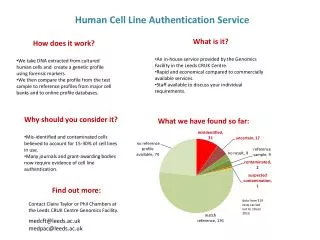
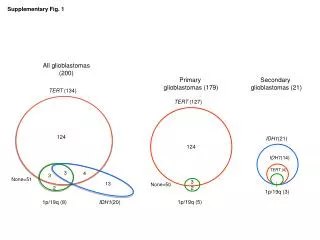
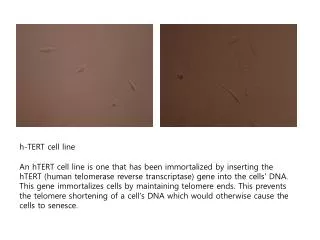
h-TERT cell line An hTERT cell line is one that has been immortalized by inserting the hTERT (human telomerase reverse transcriptase) gene into the cells' DNA. This gene immortalizes cells by maintaining telomere ends. This prevents the telomere shortening of a cell's DNA which would otherwise cause the cells to senesce.
Recurrent SETBP1 mutations in childhood Acute myeloid Leukemia
Amino acid number 778~979 Nature Genetics
C2903 (ser869) C2903T/C (ser869) Patient No.44