Exploring Biodiversity: The Essence of Life on Earth
120 likes | 221 Vues
Biodiversity is the incredible variety of life on Earth, shaped by evolution. Species evolve and adapt to their environments, showcasing tremendous diversity. However, factors like habitat destruction, pollution, uncontrolled hunting, and the introduction of exotic species threaten this richness. All living organisms share a similar chemical composition and perform vital functions: nutrition, interaction with the environment, and reproduction. Understanding the roles of autotrophs and heterotrophs, along with the basic cellular structure, is essential for appreciating life’s complexity and fragility.


Exploring Biodiversity: The Essence of Life on Earth
E N D
Presentation Transcript
Living Things Natural Science
Biodiversity • Biodiversityisthevariety of lifeontheearth • Istheresult of a slowprocesscalledevolution • Specieschangeanadapttotheenvironment • Variestremendously • WhatFactors Can Reduce Biodiversity? • Destruction of habitats • Pollution • Uncontrolledhunting and fishing • Introduction of exoticspecies
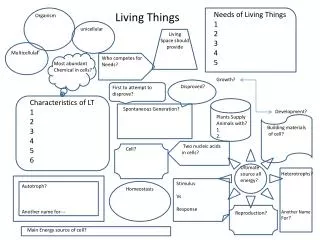
What Do All Living ThingsHave In Common? • Have a similar chemicalcomposition • All living thingsalsocarryoutthreefunctions: • Nutrition • Interactionwiththeenvironment • Reproduction
Living Things Can Be ClassifiedIntoTwoGroups • Autotrophs: • Produce theorganicsubtanceswhichtheyneedfrominorganicsubtanceslikewater and mineral salts • Heterotrophs: • Feedonorganicmatterwhichisalreadyelaborated
Reproduction • TwoTypes Of Reproduction: • Sexual and Asexual • Sexual: • Involves living things of differentsexs, eachoneprovides a sex cellorgamete.Thetwocellsjoin and formthezigote • Asexual: • Involvesone living thing.
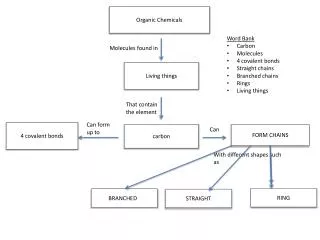
What Are Living ThingsMade Up Of? • Are made up of chemicalsubtances:Carbon,Oxygen,Hydrogen and Nitrogen • Inorganicsubtances: • Do notcontaincarbon • Organicsubtanes: • Uniqueto living things • Carbonistheir principal element
What Are Cells? • Cells are thesmallestunit of life • All living things are made up of oneor more cells • CellscarryoutthefunctionsNutrition, Reproduction and Relation • Mostcells are verysmall • Allcells come fromothercells • Basic Types Of Cells: • Prokaryotic • Eukaryotic
END • Natural ScienceUnit 1 – Living Things • Diego Lavín • Javier Ibáñez • Alejandro • Pablo Royuela