Download
1 / 62
620 likes | 739 Vues
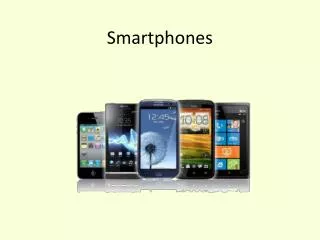
This paper presents Crowd++, an innovative method for unsupervised speaker counting using smartphones. By leveraging ubiquitous listening devices, the approach facilitates real-time analysis of social scenarios, such as determining the most popular restaurant during dinner time, assessing children's social interactions, and evaluating class attractiveness based on engagement levels. The method employs advanced voice-centric sensing techniques amalgamating speech detection, MFCC features, and cosine similarity metrics to accurately identify and count distinct speakers in conversations without prior information.

E N D
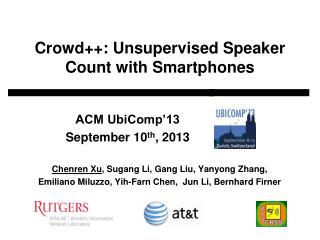
Crowd++: Unsupervised Speaker Count with Smartphones Chenren Xu, Sugang Li, Gang Liu, Yanyong Zhang, Emiliano Miluzzo, Yih-Farn Chen, Jun Li, Bernhard Firner ACM UbiComp’13 September 10th, 2013
Scenario 1: Dinner time, where to go? • I will choose this one!
Scenario 3: Which class is attractive? • She will be my choice!
Solutions? • Speaker count! • Dinner time, where to go? • Find the place where has most people talking! • Is your kid social? • Find how many (different) peoplethey talked with! • Which class is more attractive? • Check how many students ask you questions! Microphone + microcomputer
The era of ubiquitous listening Glass Necklace Watch Brace Phone
What we already have • Next thing: • Voice-centric sensing
Voice-centric sensing Speech recognition Speaker identification Family life Alice Bob Stressful Emotion detection 3 Speaker count 2
Speech detection • Pitch-based filter • Determined by the vibratory frequency of the vocal folds • Human voice statistics: spans from 50 Hz to 450 Hz Human voice 450 50 f (Hz)
Speaker features • MFCC • Speaker identification/verification • Alice or Bob, or else? • Emotion/stress sensing • Happy, or sad, stressful, or fear, or anger? • Speaker counting • No prior information • Supervised • Unsupervised
Speaker features • Same speaker or not? • MFCC + cosine similarity distance metric MFCC 2 θ MFCC 1 • We use the angle θto capture the distance between speech segments.
Speaker features • MFCC + cosine similarity distance metric Alice’s MFCC in speech segment 3 Bob’s MFCC in speech segment 2 θd θs Bob’s MFCC in speech segment 1 θd>θs
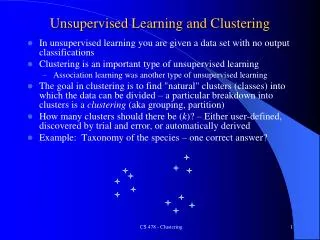
Speaker features • MFCC + cosine similarity distance metric histogram of θd histogram of θs 1 second speech segment 2-second speech segment • We use 3-second for basic speech unit. 3-second speech segment . . . • 10 seconds is not natural in conversation! 10-second speech segment
Speaker features • MFCC + cosine similarity distance metric 3-second speech segment 15 30
Speaker features • Pitch + gender statistics (Hz)
Same speaker or not? IFMFCC cosine similarity score < 15 AND Pitch indicates they are same gender Same speaker ELSEIFMFCC cosine similarity score > 30 OR Pitch indicates they are different genders Different speakers ELSE Not sure
Conversation example Time Speaker A Speaker B Speaker C Overlap Overlap Silence Conversation
Unsupervised speaker counting • Phase 1: pre-clustering • Merge the speech segments from same speakers
Unsupervised speaker counting Ground truth Segmentation Same speaker Pre-clustering
Unsupervised speaker counting Ground truth Segmentation Merge Pre-clustering
Unsupervised speaker counting Ground truth Segmentation Keep going … Pre-clustering
Unsupervised speaker counting Ground truth Segmentation Same speaker Pre-clustering
Unsupervised speaker counting Ground truth Segmentation Merge Pre-clustering
Unsupervised speaker counting Ground truth Segmentation Keep going … Pre-clustering
Unsupervised speaker counting Ground truth Segmentation Same speaker Pre-clustering
Unsupervised speaker counting Ground truth Segmentation Merge Pre-clustering
Unsupervised speaker counting Ground truth Segmentation Merge Pre-clustering . . . Pre-clustering
Unsupervised speaker counting • Phase 1: pre-clustering • Merge the speech segments from same speakers • Phase 2: counting • Only admit new speaker when its speech segment is different from all the admitted speakers. • Dropping uncertain speech segments.
Unsupervised speaker counting Counting: 0
Unsupervised speaker counting Counting: 1 Admit first speaker
Unsupervised speaker counting Counting: 1 Not sure Counting: 1
Unsupervised speaker counting Counting: 1 Drop it Counting: 1
Unsupervised speaker counting Counting: 1 Different speaker Counting: 1
Unsupervised speaker counting Counting: 1 Admit new speaker! Counting: 2
Unsupervised speaker counting Counting: 1 Counting: 2 Same speaker Counting: 2
Unsupervised speaker counting Counting: 1 Counting: 2 Same speaker Counting: 2 Different speaker
Unsupervised speaker counting Counting: 1 Counting: 2 Merge Counting: 2
Unsupervised speaker counting Counting: 1 Counting: 2 Not sure Counting: 2
Unsupervised speaker counting Counting: 1 Counting: 2 Not sure Counting: 2 Not sure
Unsupervised speaker counting Counting: 1 Counting: 2 Drop Counting: 2
Unsupervised speaker counting Counting: 1 Counting: 2 Different speaker Counting: 2
Unsupervised speaker counting Counting: 1 Counting: 2 Different speaker Counting: 2 Different speaker
Unsupervised speaker counting Counting: 1 Counting: 2 Admit new speaker! Counting: 3
Unsupervised speaker counting Counting: 1 Counting: 2 Counting: 3 Ground truth • We have three speakers • in this conversation!
Evaluation metric • Error count distance • The difference between the estimated count and the ground truth.